Claude Lalanne Created The Cutlery of Our Dreams
What if the most beautiful thing on your dinner table was also a sculpture? Claude Lalanne had a particular talent for making the everyday feel slightly surreal, and her cutlery might be the most charming example of it.
Claude Lalanne spent much of her career turning nature into objects that were somewhere between sculpture, furniture and fantasy. Leaves became mirrors. Snails became spoons. Branches became handles. Her work had a strange ability to make the familiar look newly discovered.
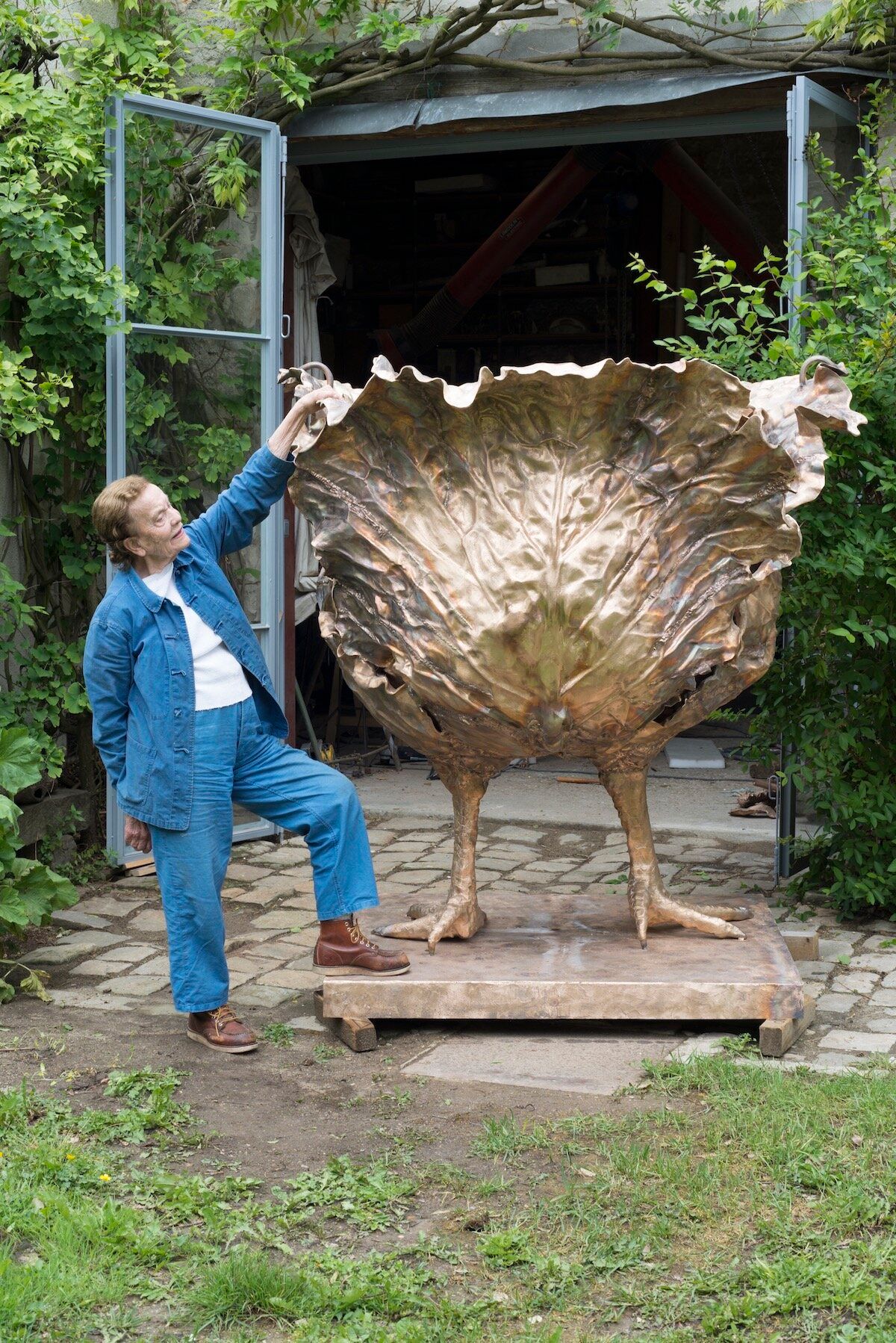
She brought that same instinct to the dining table.
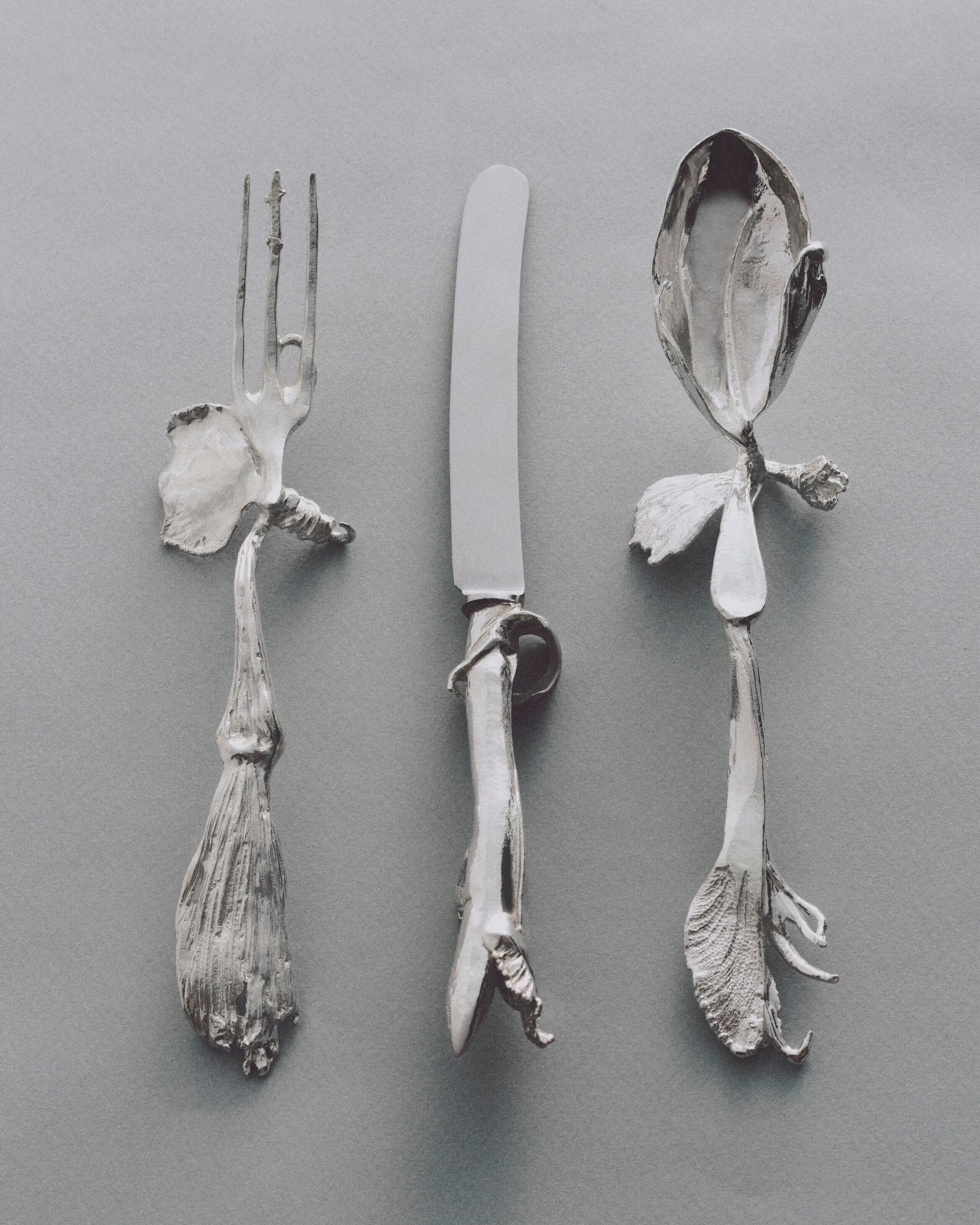
Her cutlery is recognisable at once. Handles twist into branches, leaves appear to grow around stems and small creatures seem to have wandered into the design. The pieces are functional, technically speaking, but functionality was clearly not the end of the story. Lalanne transformed something as ordinary as a knife, fork or spoon into a miniature sculpture.
The idea was particularly radical at a time when modern design was often associated with stripping objects back to their simplest possible forms. Lalanne went in the opposite direction. She made them stranger, more decorative and much more fun.
The technique helped. Lalanne used galvanoplasty, a process that allowed her to reproduce forms by depositing metal onto a mould. She had learned the technique from the American sculptor James Metcalf, and it became an important part of her practice, allowing organic shapes to move from the natural world into silver and bronze.
The result was tableware that was never really just tableware.
The Cutlery That Made It to Paris’s Best Tables
Lalanne’s world was closely connected to the people who made Parisian cultural life so interesting in the 1960s and 70s. Through the legendary gallerist Alexandre Iolas, who exhibited the Lalannes internationally, her work found its way into the homes and dining rooms of some of the era’s most influential collectors.
Yves Saint Laurent was among her devoted supporters. Marie-Hélène and Guy de Rothschild were collectors too, and their famous dinner parties provided a particularly appropriate setting for Lalanne’s work. Guests were served with Claude’s vegetable-patterned cutlery, bringing her strange little botanical universe directly onto the table.
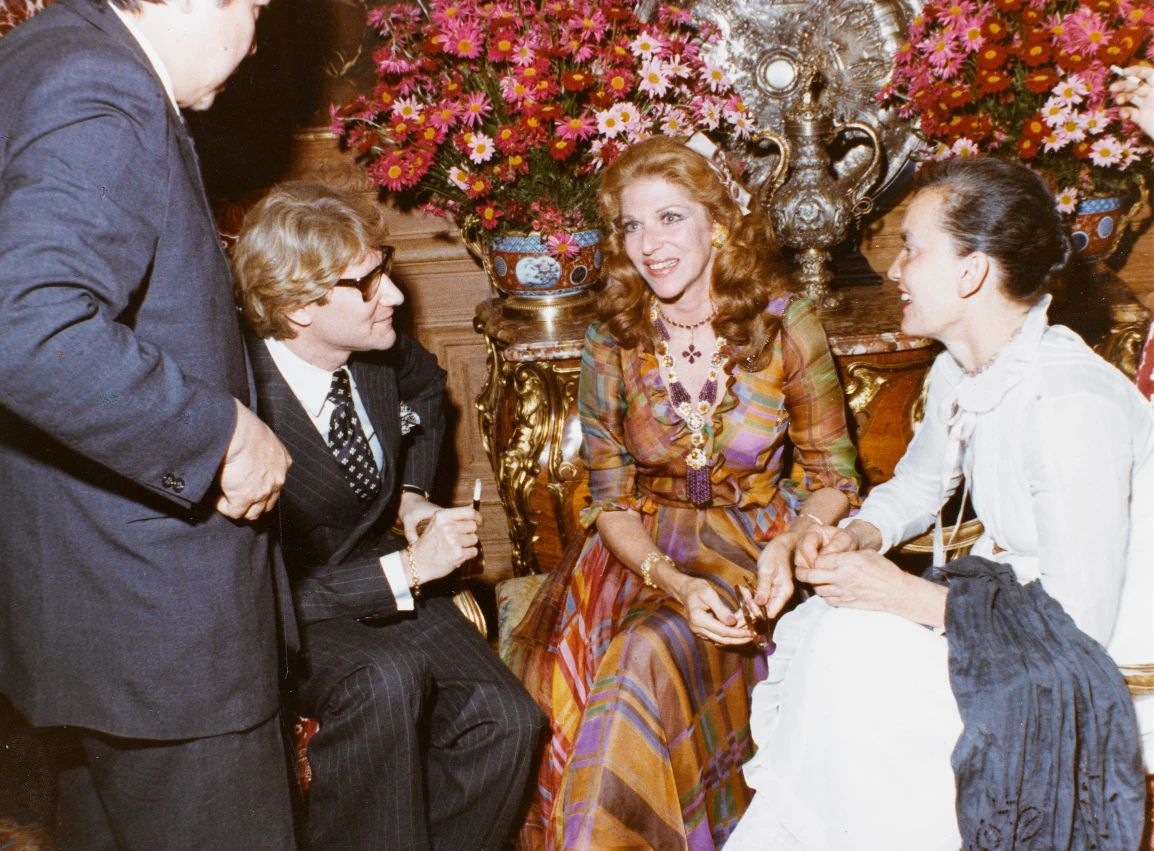
The Rothschild connection went deeper than a dinner service. Lalanne pieces remained in the family collection for decades, including an extensive Sven flatware service, designed in 1974 and executed later, which eventually appeared at auction.
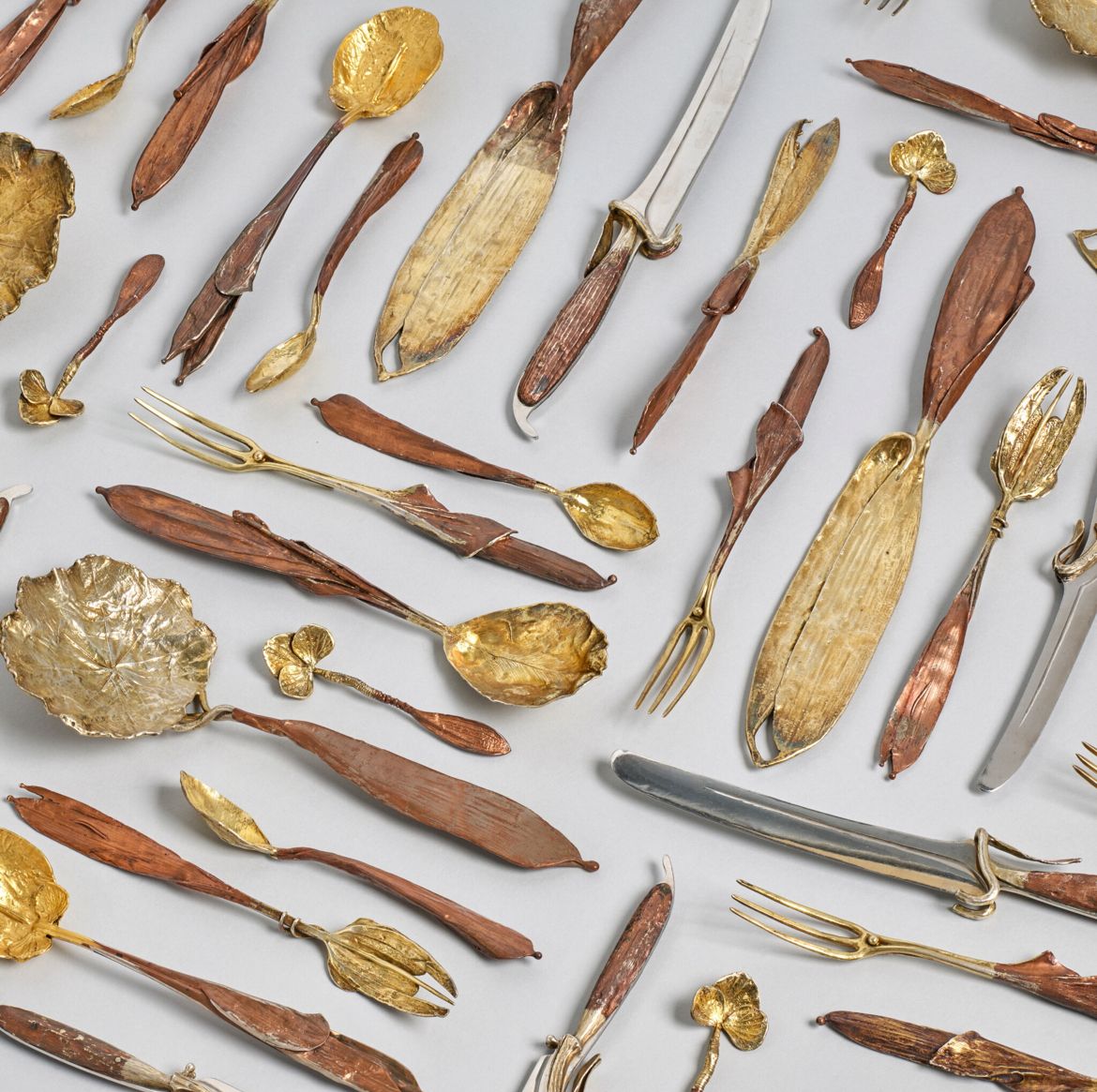
It is easy to imagine the effect. A beautifully dressed Parisian table, a silver service that looks as though it has just escaped from a greenhouse, and guests who have probably already seen everything.
Then there was Salvador Dalí.
And Then Dalí Took Credit for It
Lalanne’s relationship with Dalí began with admiration, friendship and a slightly surreal amount of borrowing.
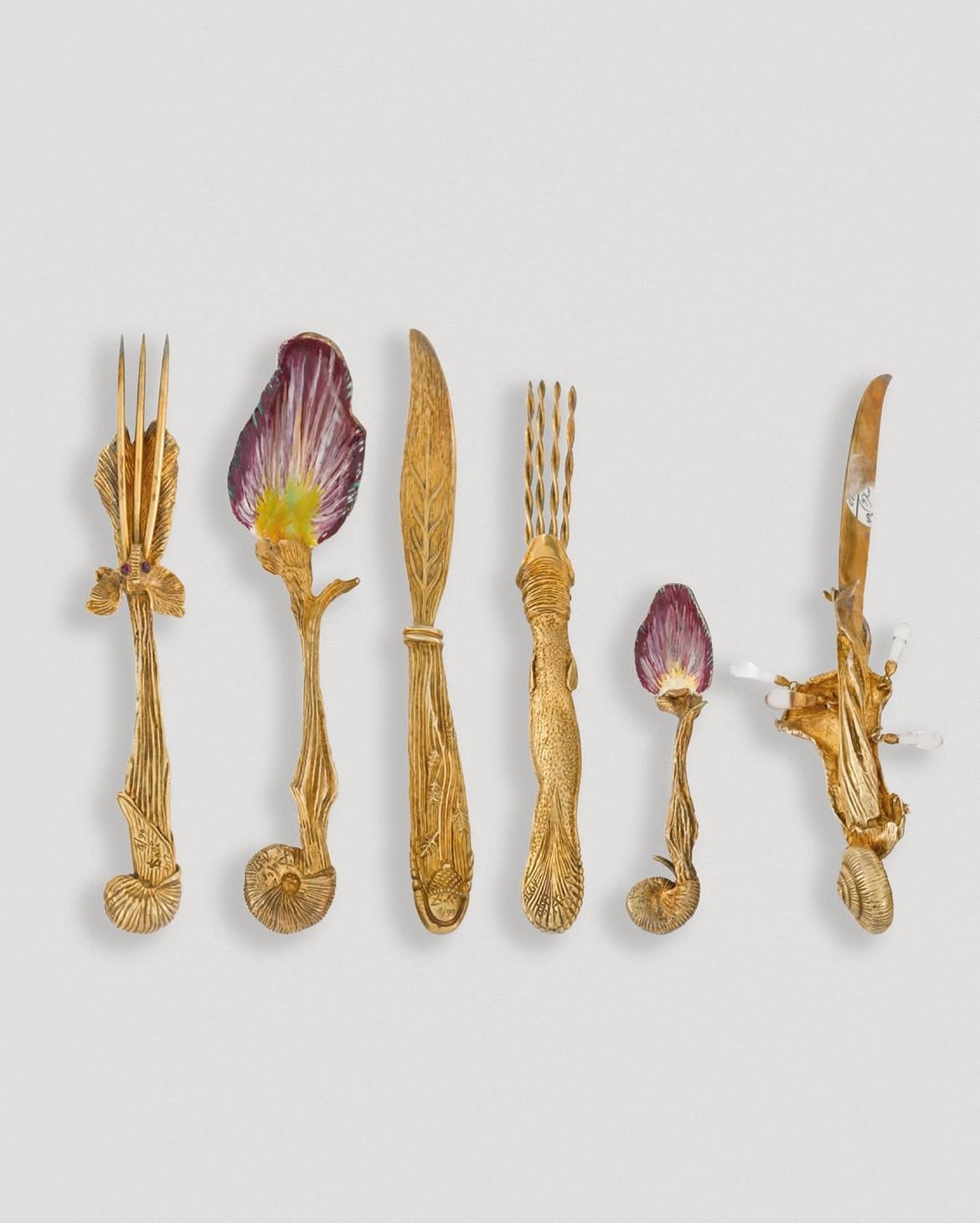
Dalí asked her to make a set of cutlery for him. She did. Lalanne later recalled that she created the knife, fork and spoon herself, only to discover that Dalí had reproduced them in a book about his work under his own name.
She was not particularly amused.
“I think I can say that those items of cutlery are among the emblematic objects of my production,” she later told Sotheby’s.
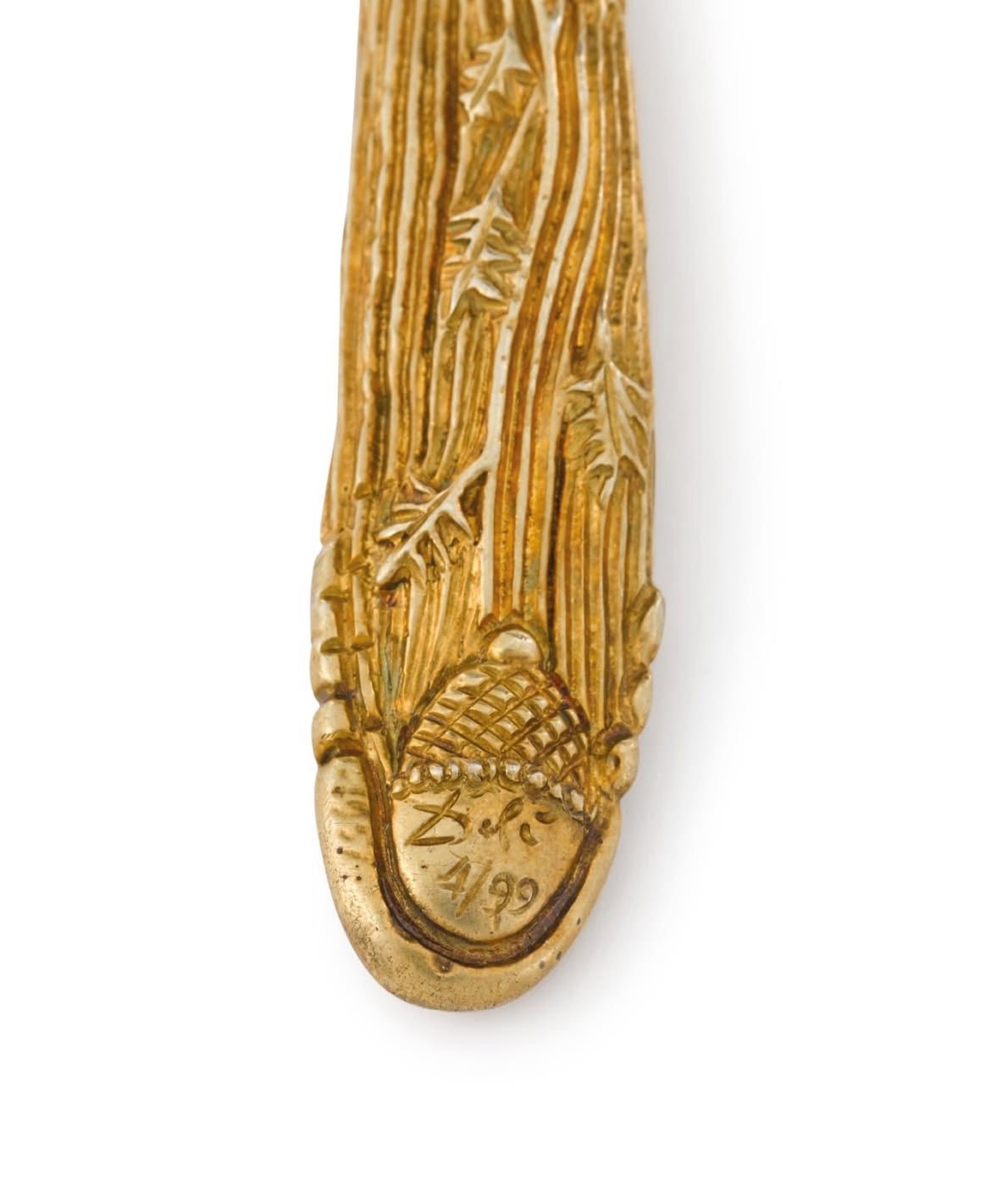
The story becomes even more Lalanne-like when you know that Dalí had previously borrowed another of her creations, an onion-shaped watch, and failed to return it. Eventually Gala called Lalanne to the Hôtel Meurice and gave the watch back.
The cutlery was less easily corrected.
Today, the episode is part of the mythology surrounding the pieces, but the work itself is unmistakably Claude Lalanne. The Musée des Arts Décoratifs describes her Iolas silverware, made in 1966, as being far removed from the functionalism of the period, with interlacing leaves and crustaceans. It also notes that Salvador Dalí was subsequently credited with the pieces, despite Lalanne having created them.
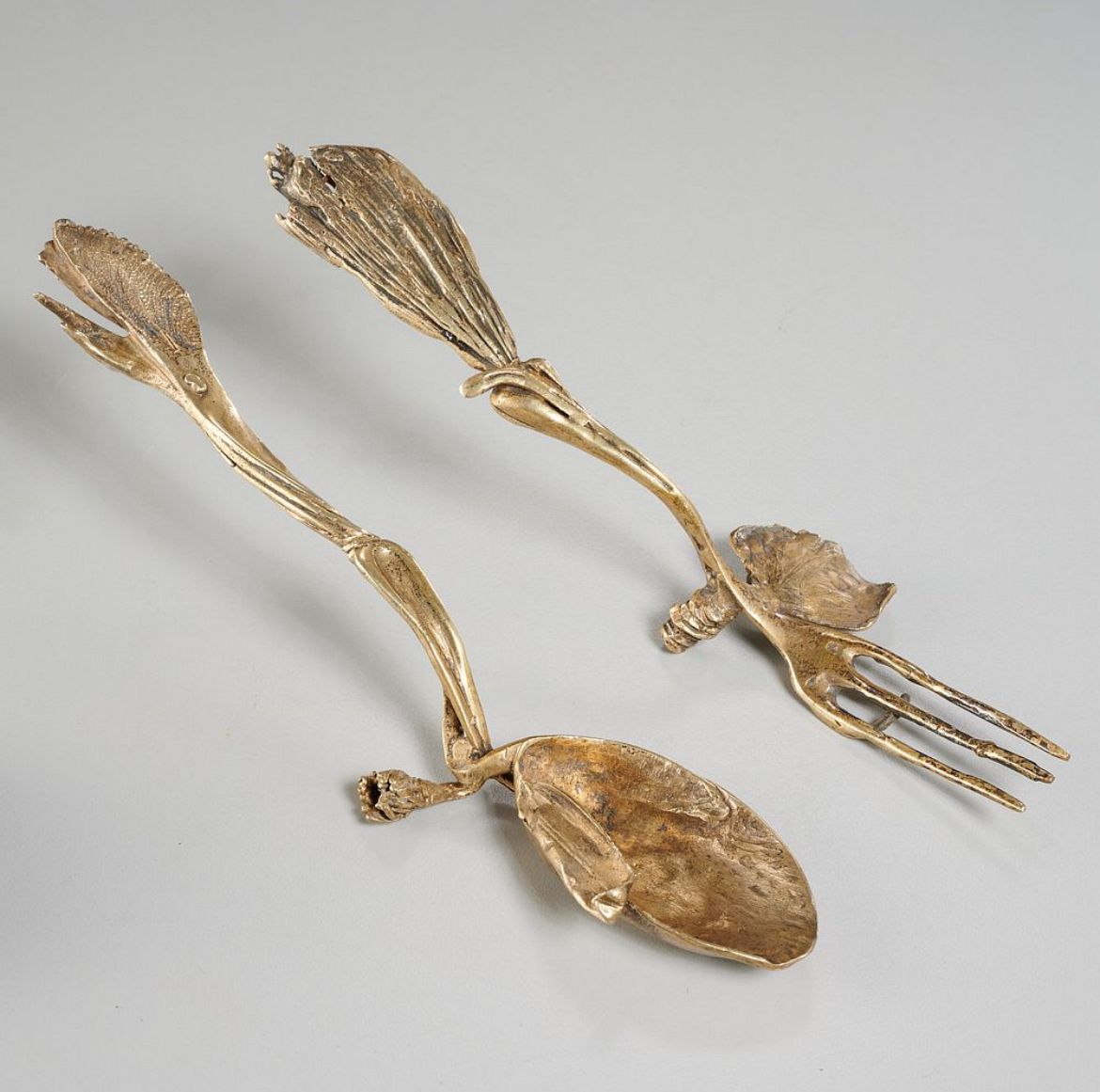
There is something almost perfect about the fact that a set of surrealist cutlery ended up with its own surrealist authorship dispute.
When a Spoon Becomes a Sculpture
Lalanne’s fascination with cutlery was not a side project. She herself later identified it as one of the most representative parts of her work, alongside her tables and chairs.
Different series explored the same basic idea in different ways. The Iolas service, first designed in the 1960s, incorporated leaves and crustaceans. Later works became even more elaborate. Her Phagocyte service, designed in 1991, comprised more than 160 pieces in gilt silver, including dinner, fish, dessert and coffee cutlery.
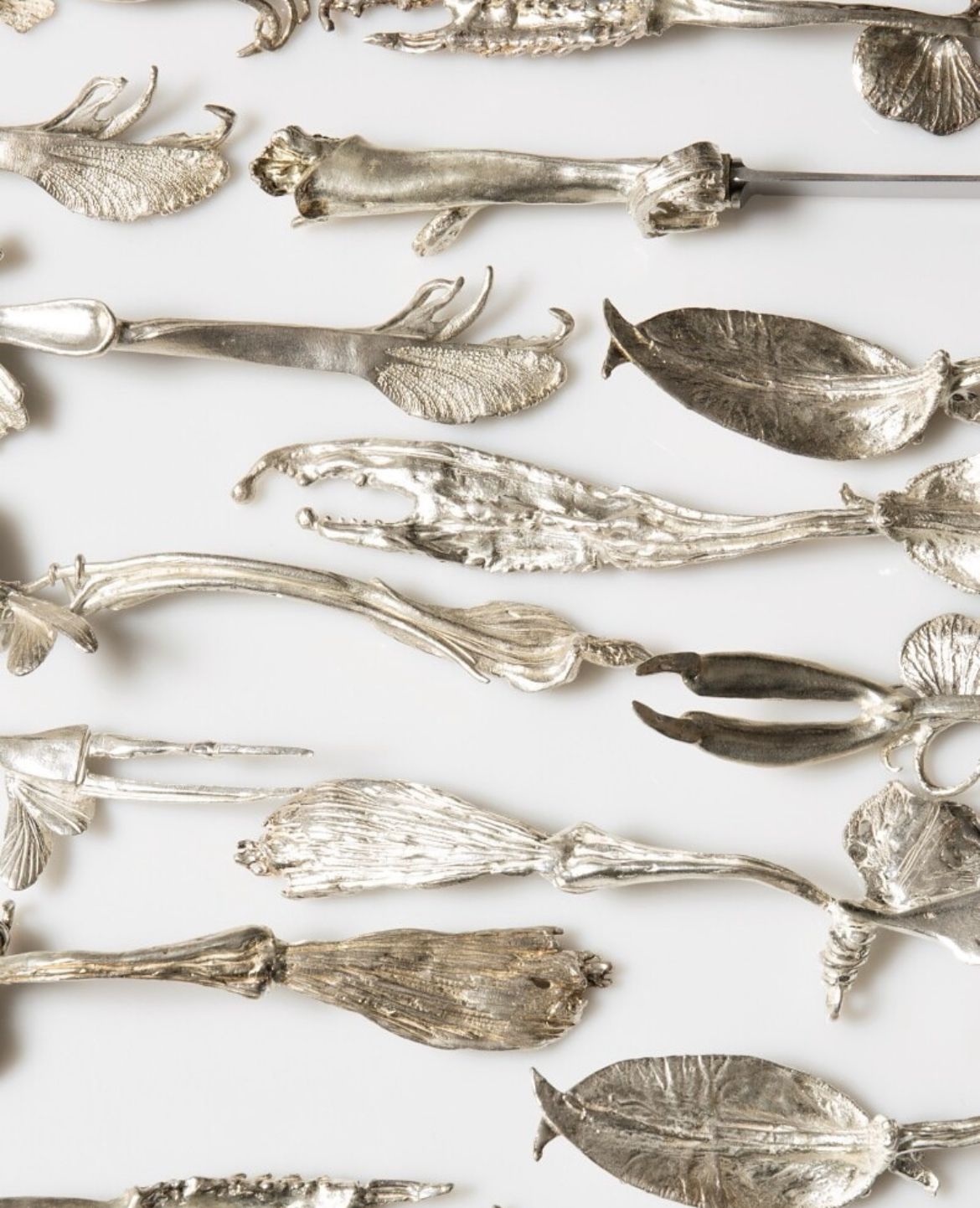
These were not mass-market objects. Lalanne’s silver services were produced in limited editions, numbered and signed, which placed them somewhere between functional design and collectible sculpture. One Iolas service auctioned by Sotheby’s, for example, consisted of 64 pieces from an edition of eight plus artist’s proofs.
That status has only become clearer with time. Lalanne died in 2019, but her work continues to circulate through specialist galleries and major auction houses, where complete services can command substantial estimates. A 2026 Sotheby’s sale of a 56-piece Sven service carried an estimate of $80,000 to $120,000.
And perhaps that is why the cutlery remains so appealing.
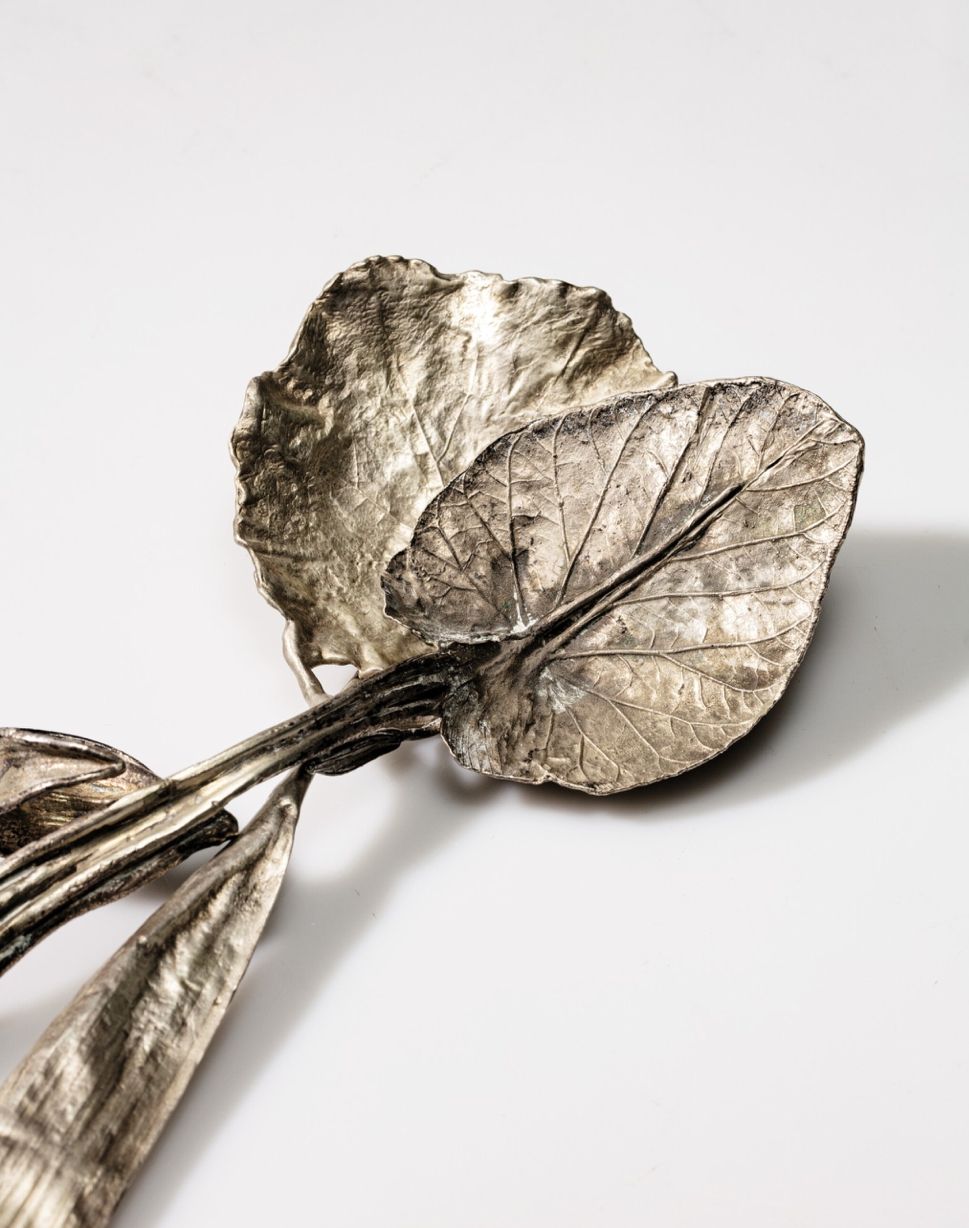
A good spoon should disappear into a meal. Claude Lalanne’s does the opposite. It asks to be noticed, picked up, turned around in your hand and looked at again.
Which is probably exactly what dinner needs sometimes.