Inside Marchesi, the Historic Pasticceria Where Everything Is Beautiful
For two centuries, Marchesi has been doing something rather unusual in Milan: making pastry look almost too beautiful to eat. Founded in 1824, the historic pasticceria became a Milanese institution long before Prada acquired an 80% stake in 2014. Today, its pastel boxes, immaculate cakes and elegant cafés sit somewhere between confectionery, design and fashion.
At Via Santa Maria alla Porta, a short walk from the Duomo, Marchesi still occupies the address where the Marchesi family opened its pastry shop in 1824. Two centuries later, the place has become one of those Milanese addresses where the distinction between eating and looking starts to disappear.
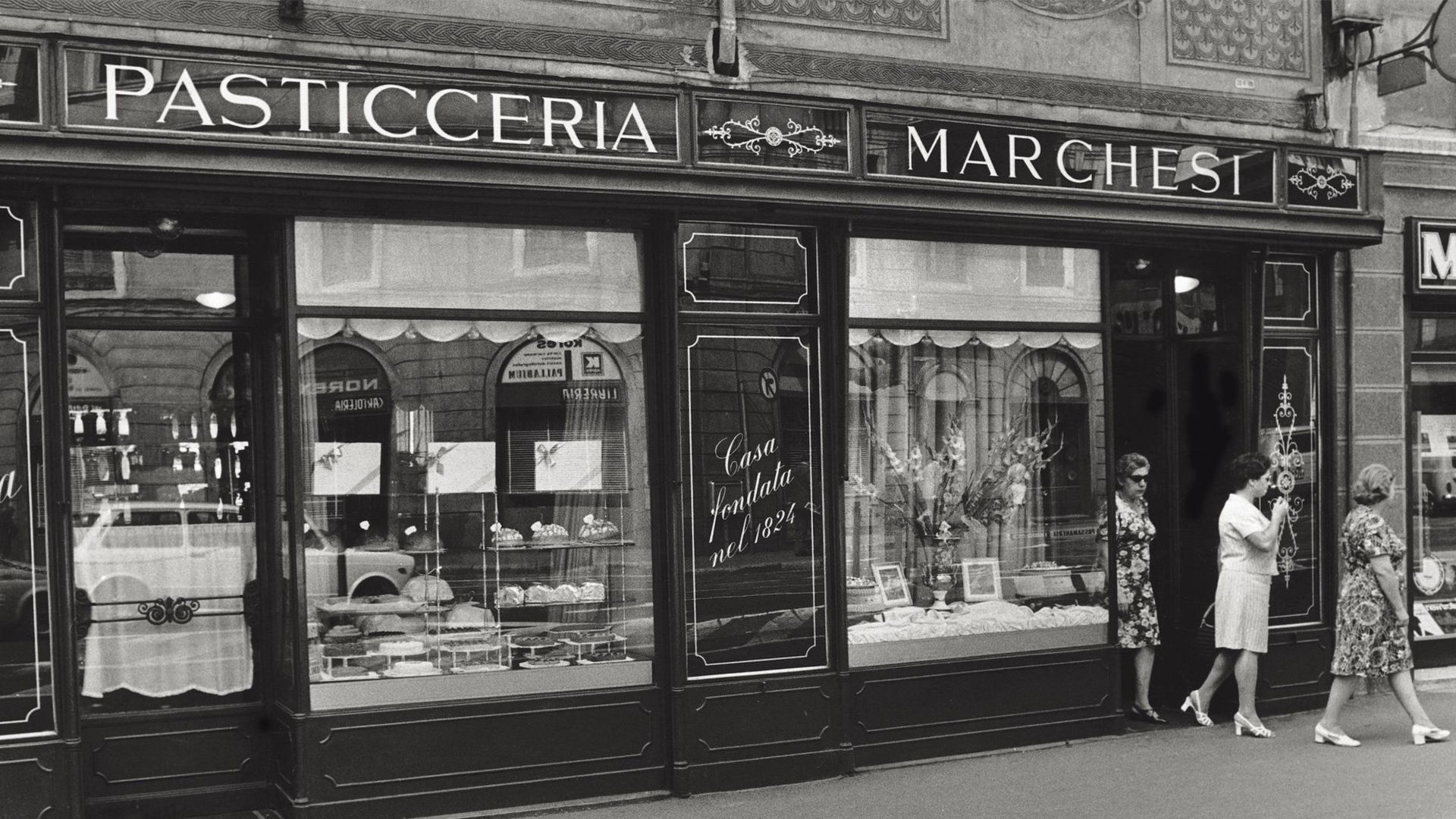
The history began, appropriately enough, with pastry. Marchesi quickly established a reputation for artisanal confectionery and for its panettone, which became one of the house’s signatures. But the business gradually became something more than a shop where you bought something sweet and went home.
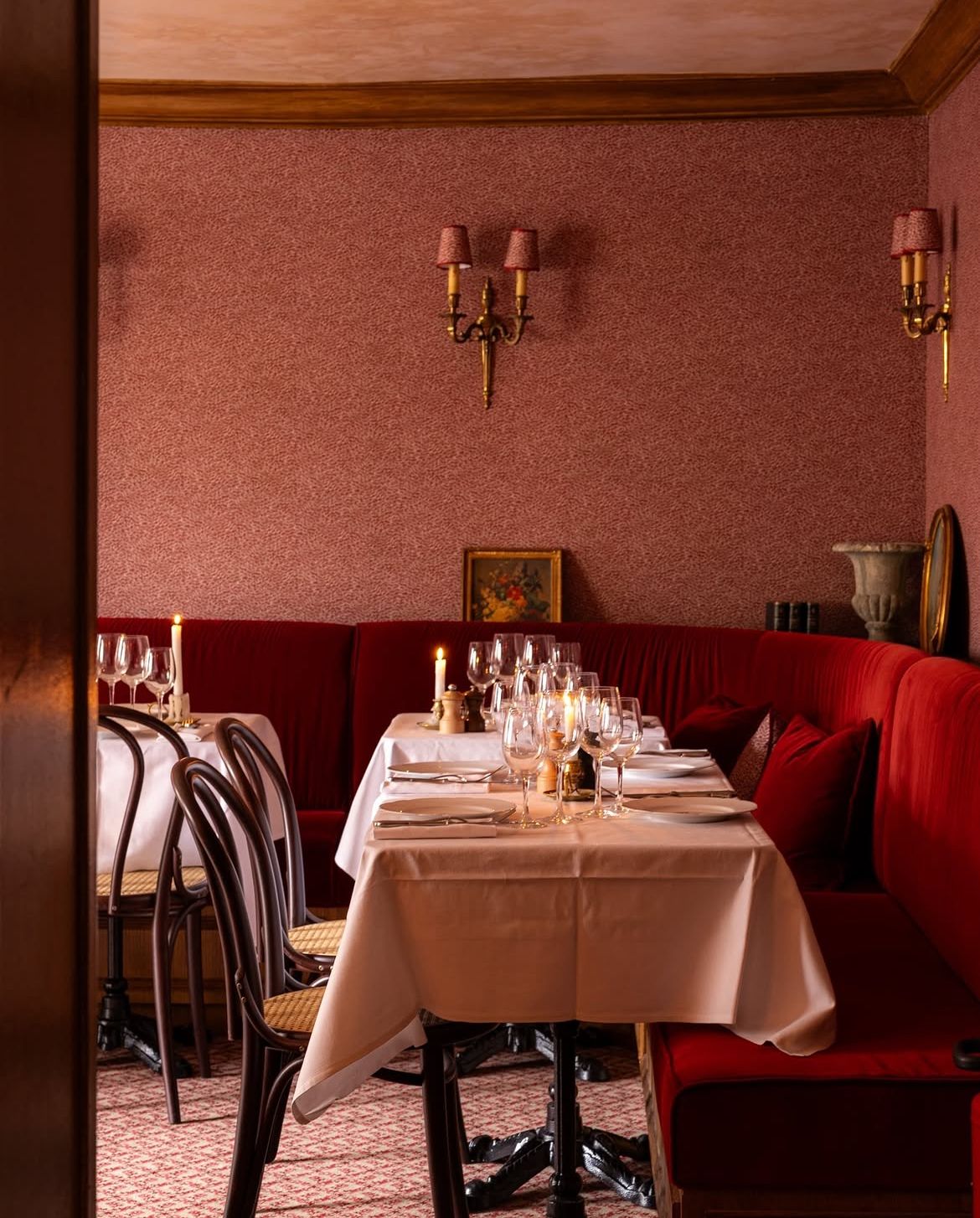
In the early twentieth century, Angelo Marchesi began serving coffee, drinks and, later, aperitivo. The pasticceria became a place to stay. Coffered ceilings, antique furnishings and the atmosphere of an old Milanese café gave it another kind of role in the city: not simply somewhere to purchase pastry, but somewhere to spend time.
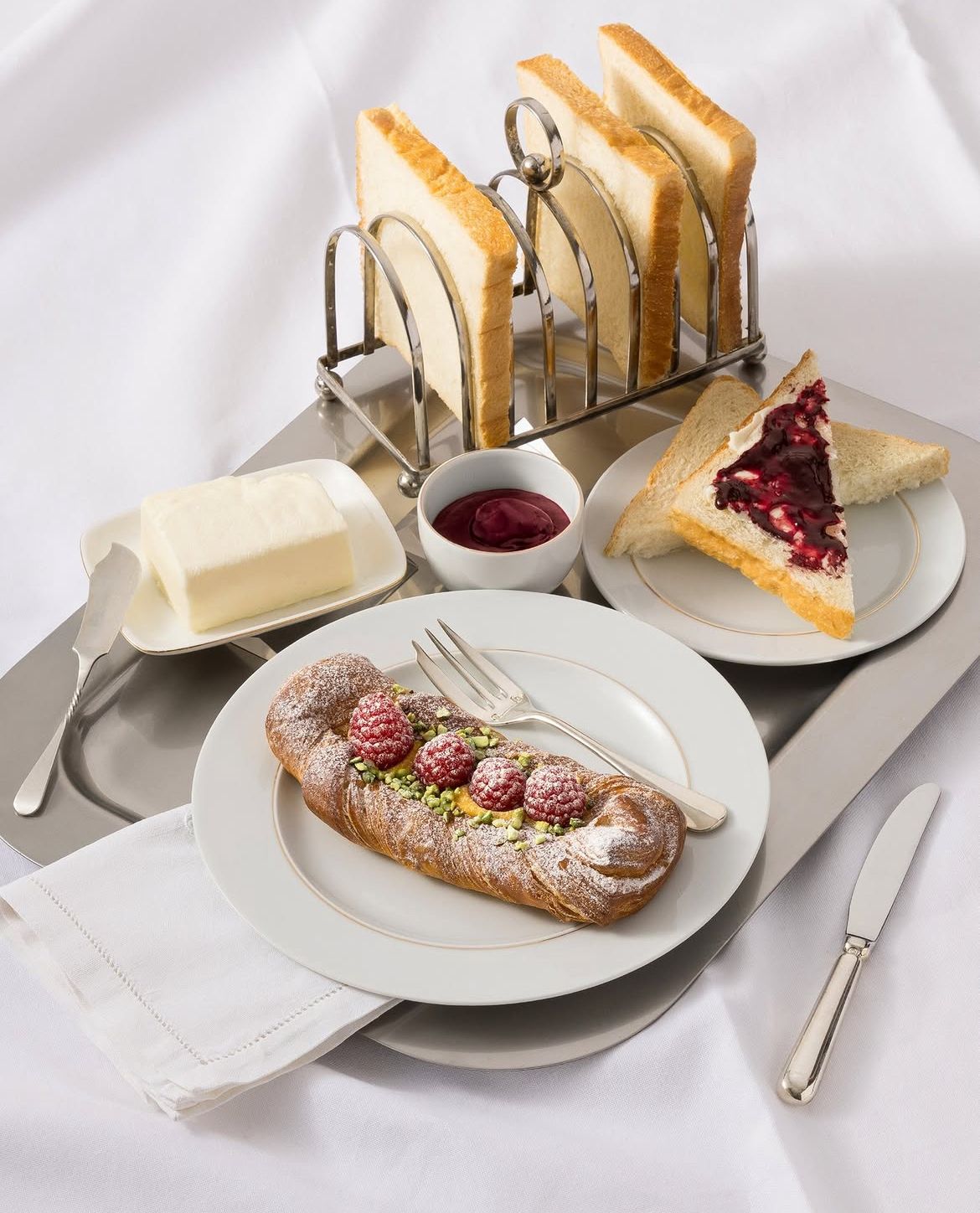
That idea has survived remarkably well.
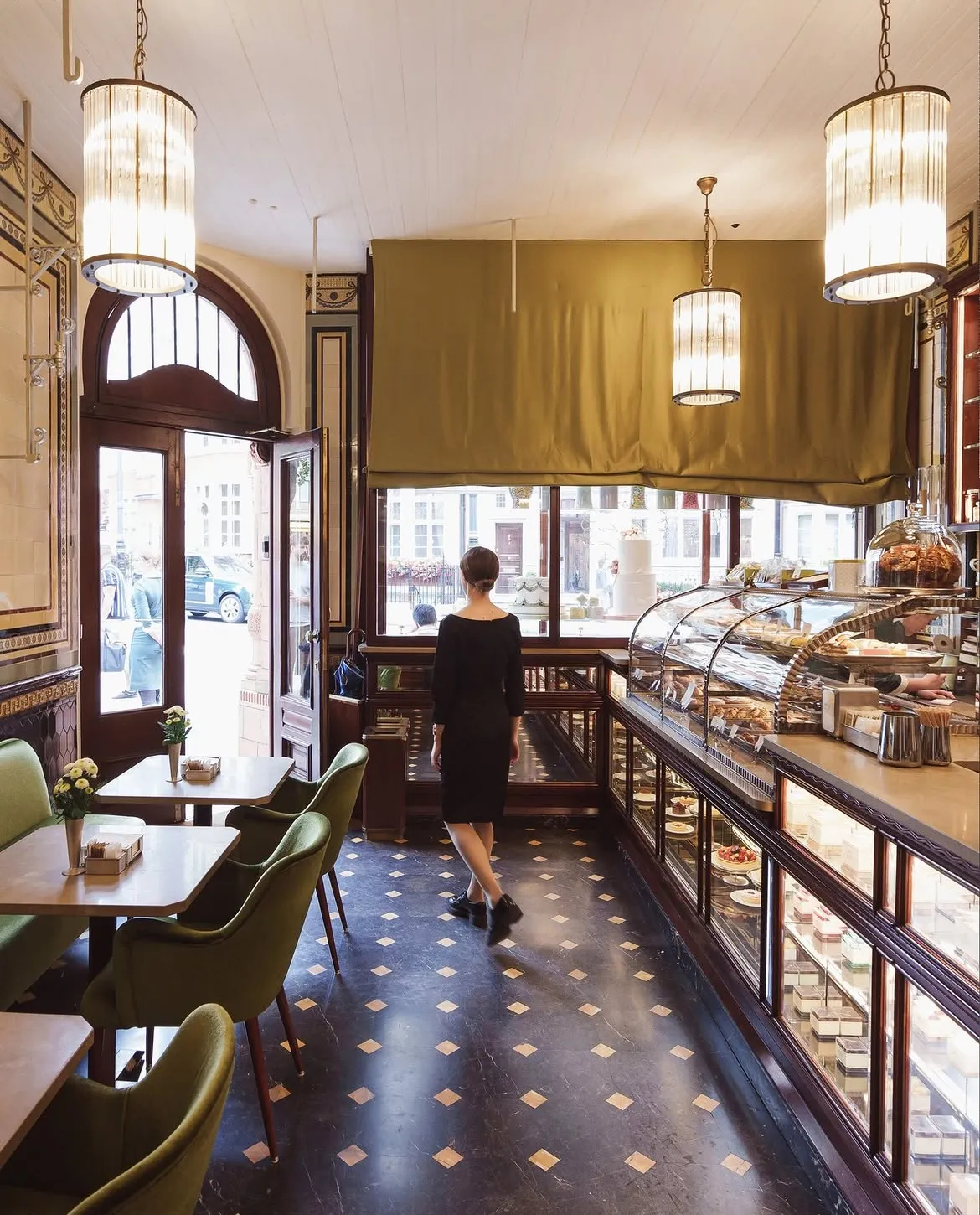
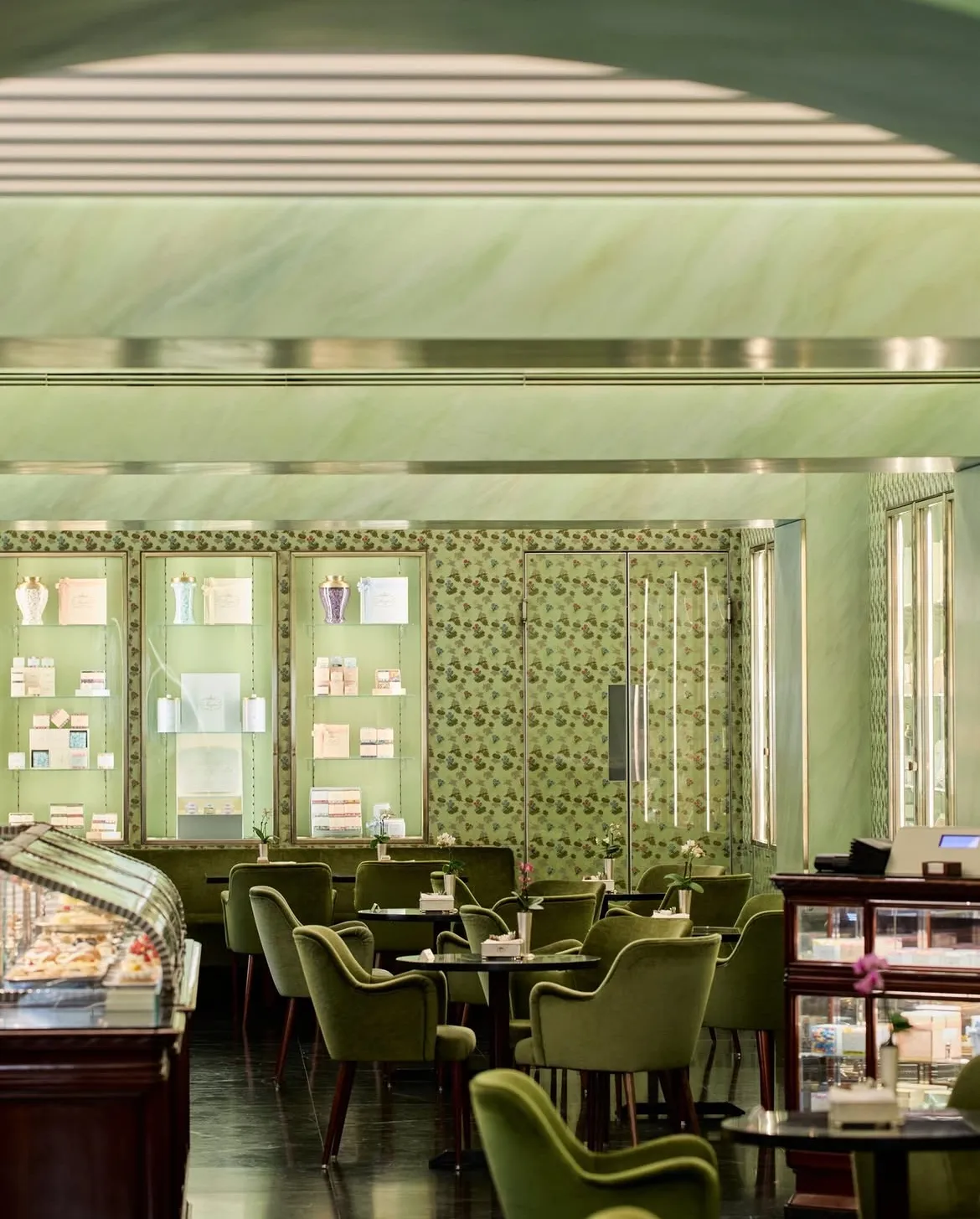
The original interior still has the quality that makes historic places so appealing when they have been allowed to age with dignity. Nothing needs to announce that it is elegant. The mirrors, wood, lighting and display counters do the work.
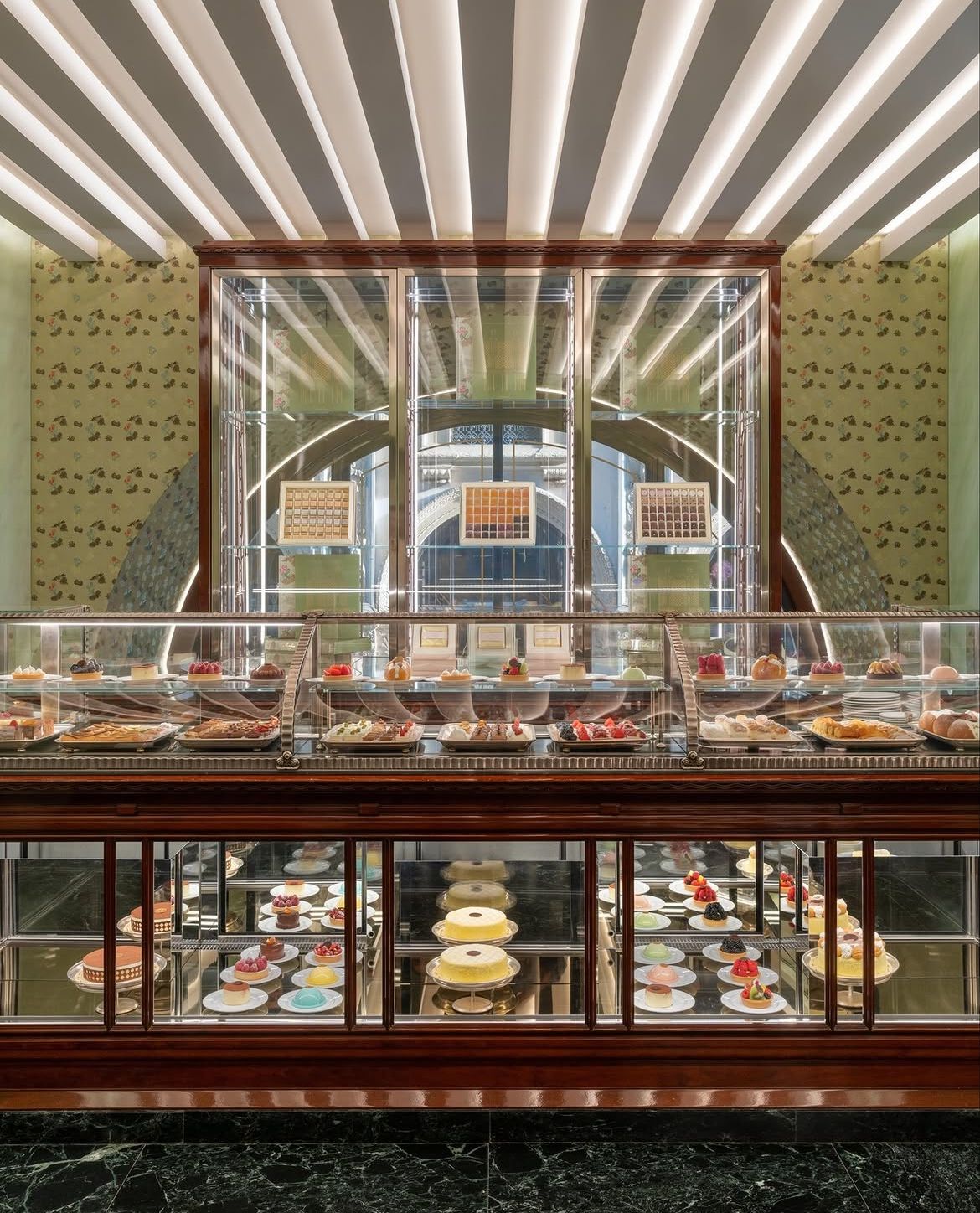
And then there is the pastry.
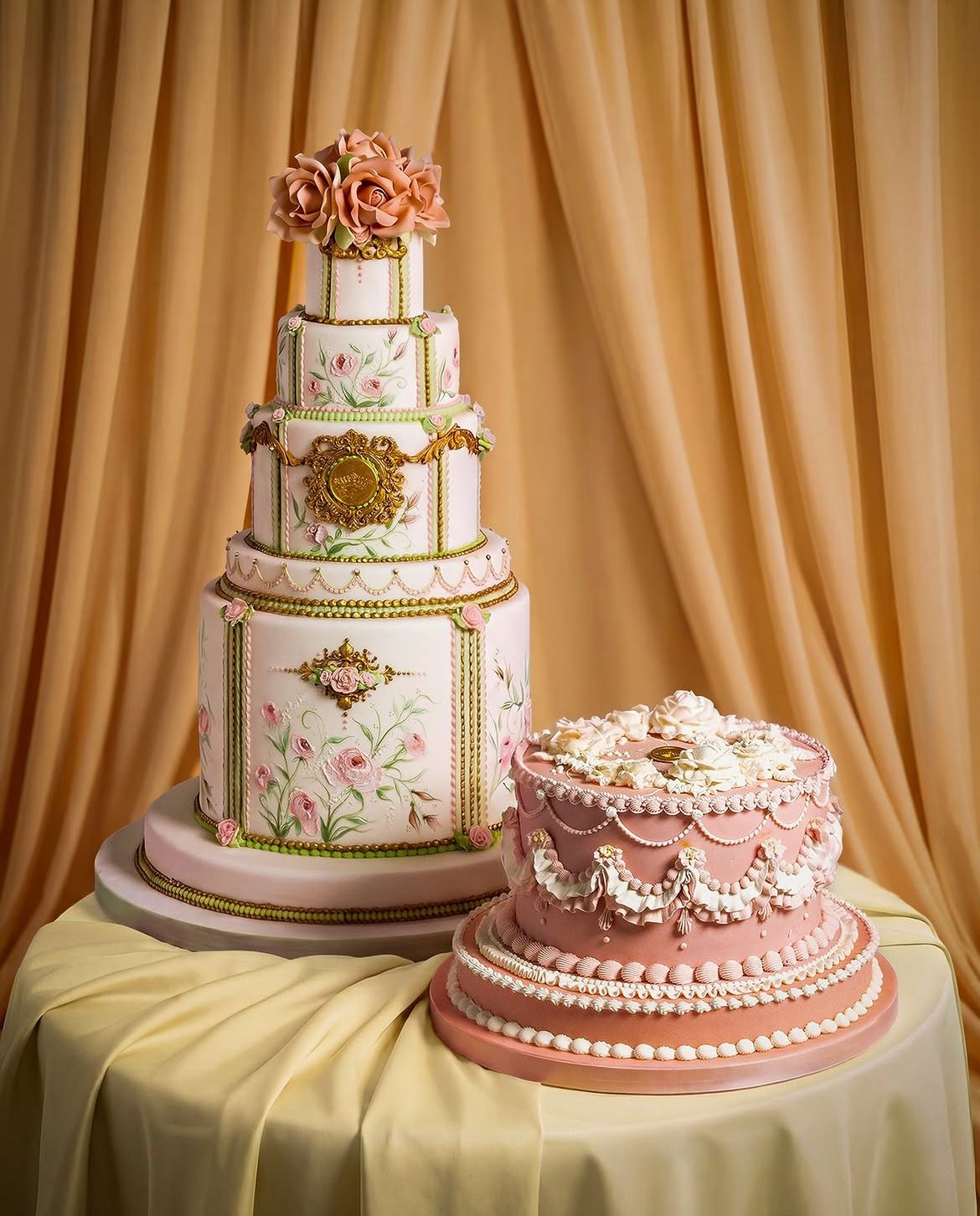
The Point Was Never Just the Cake
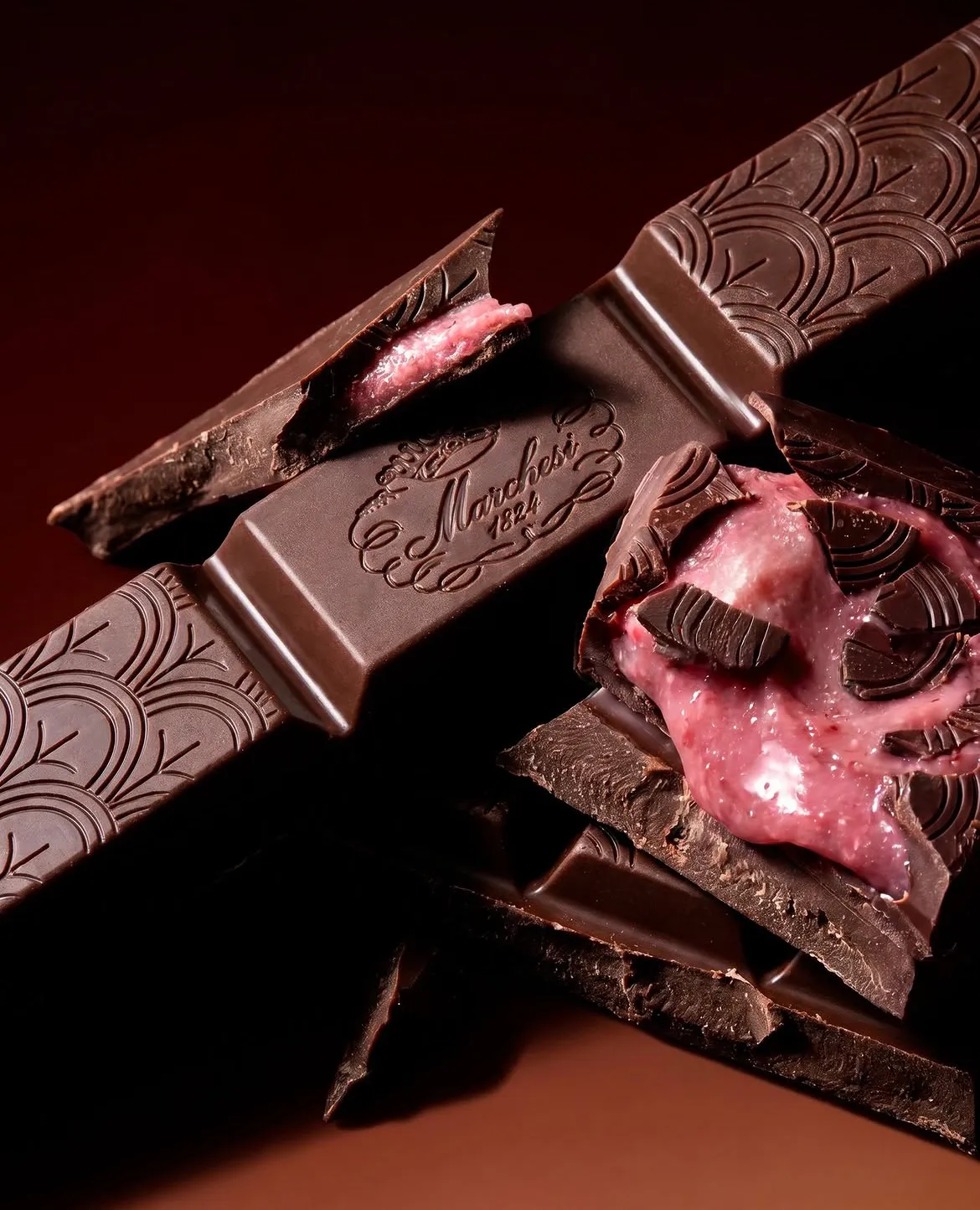
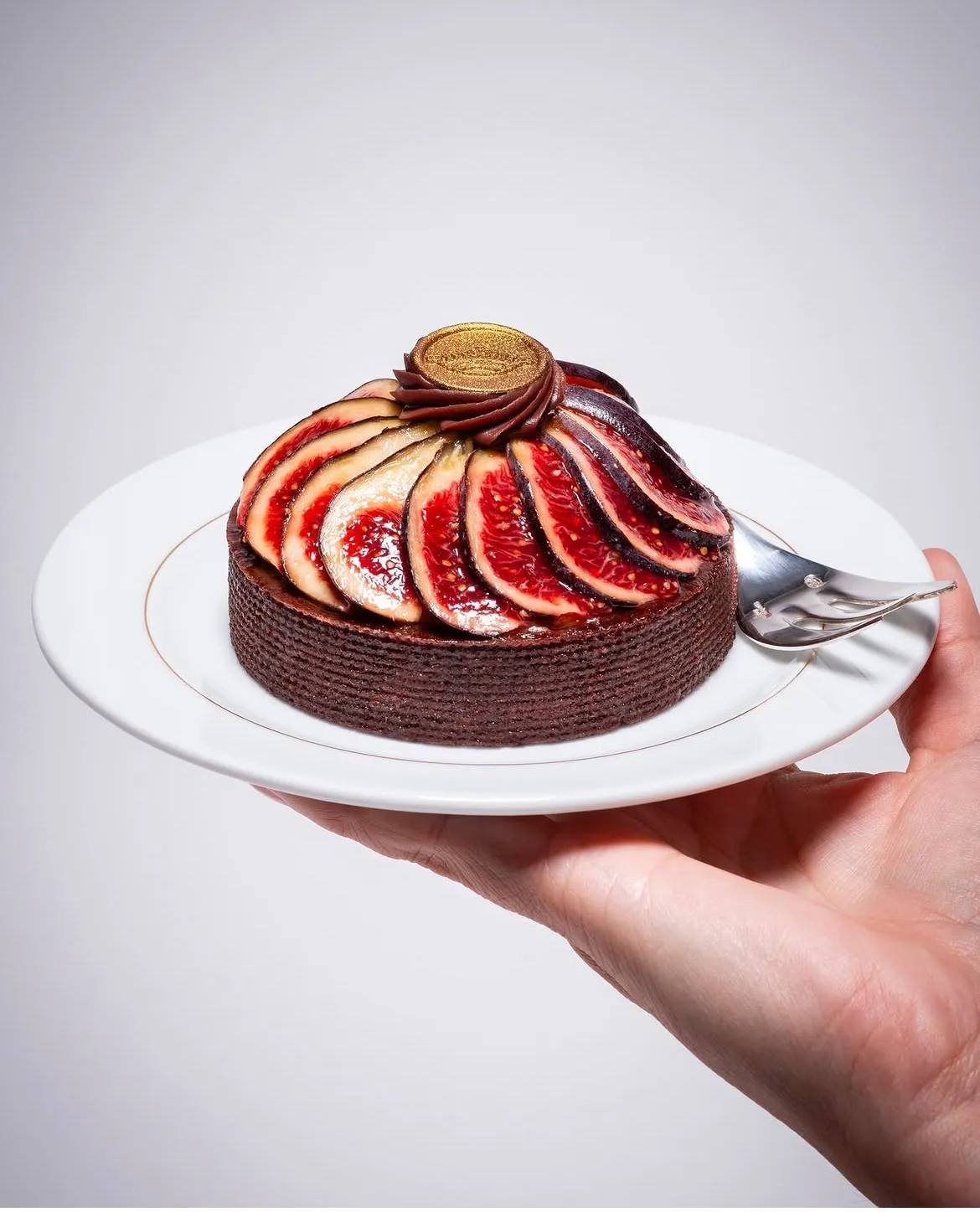
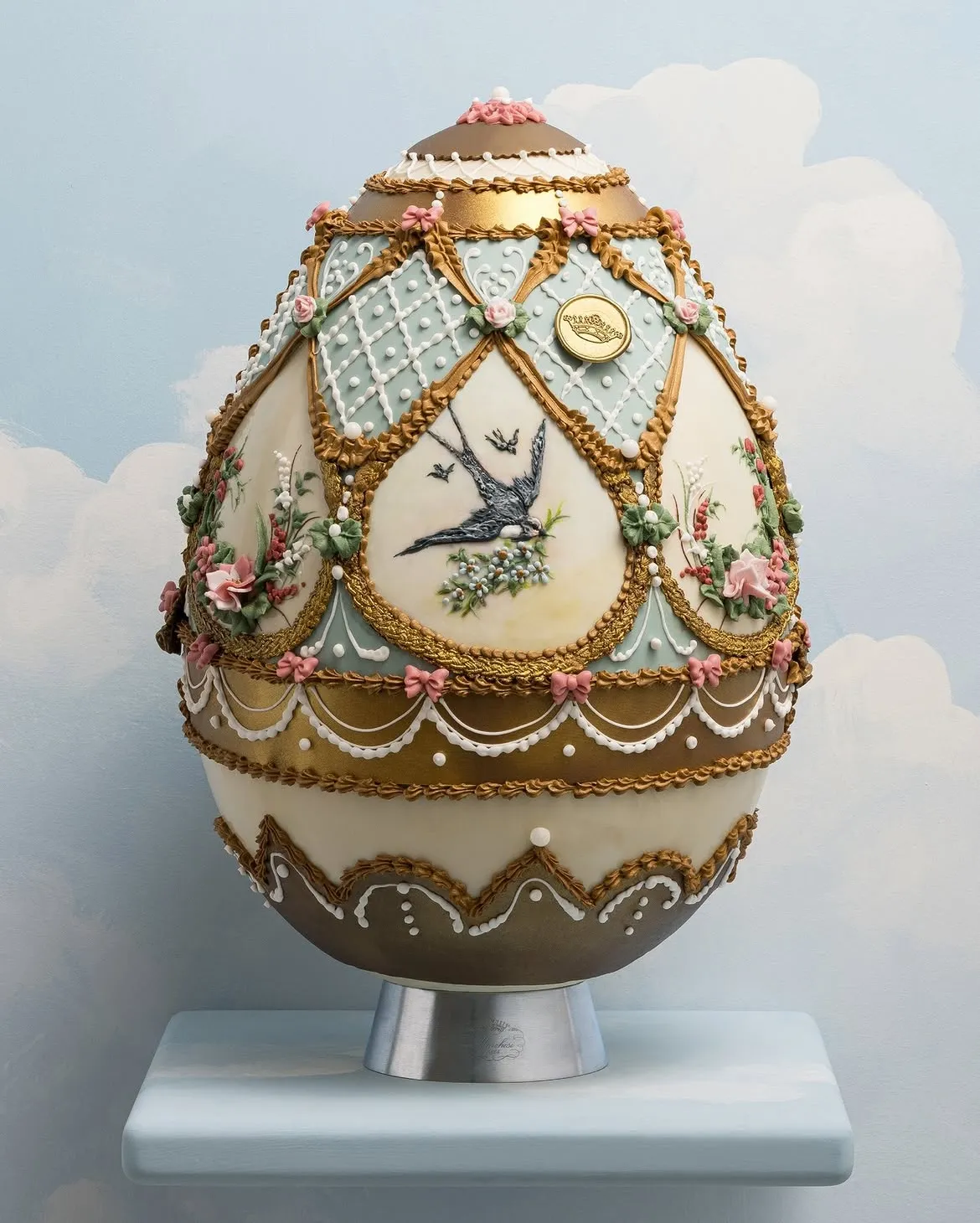
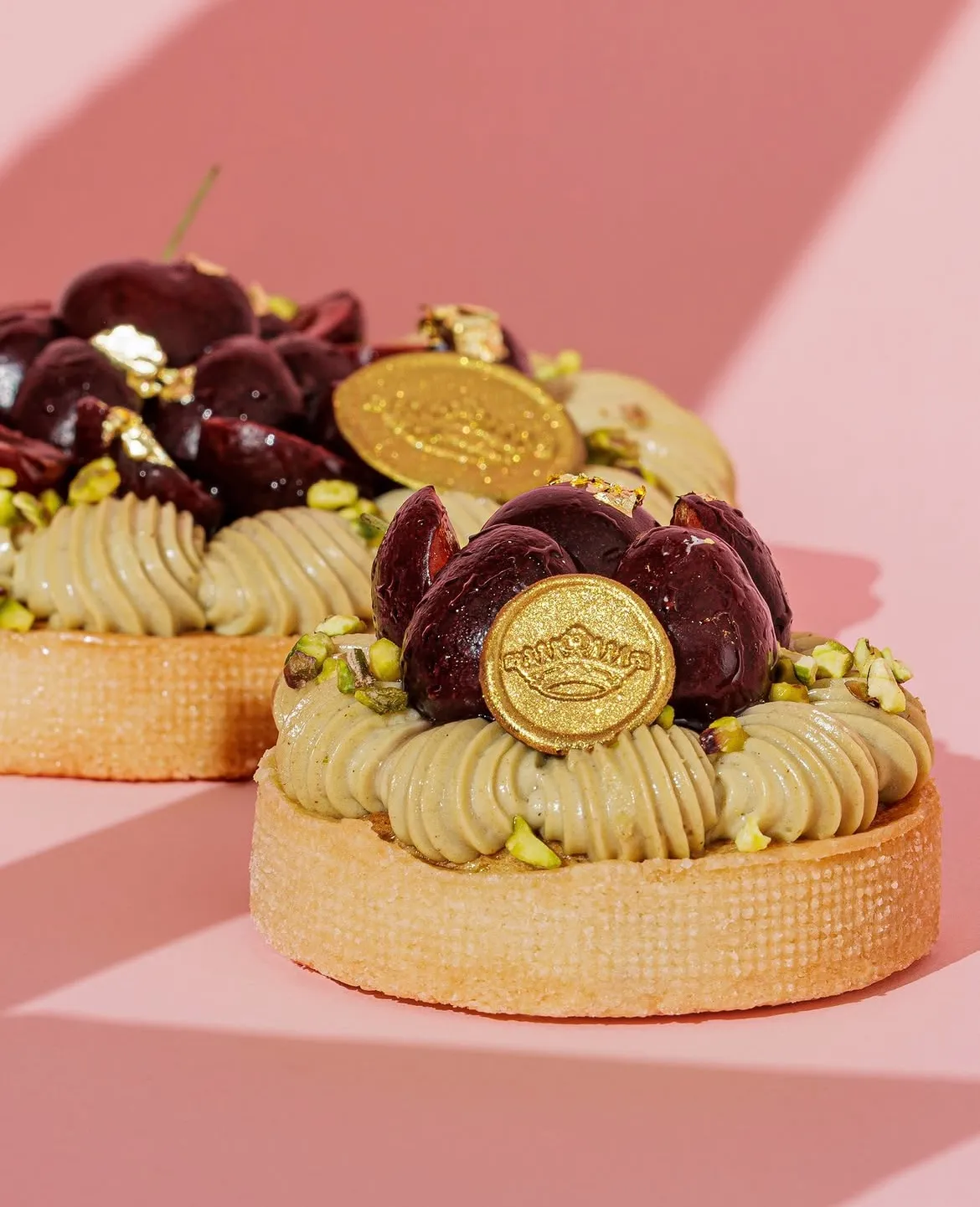
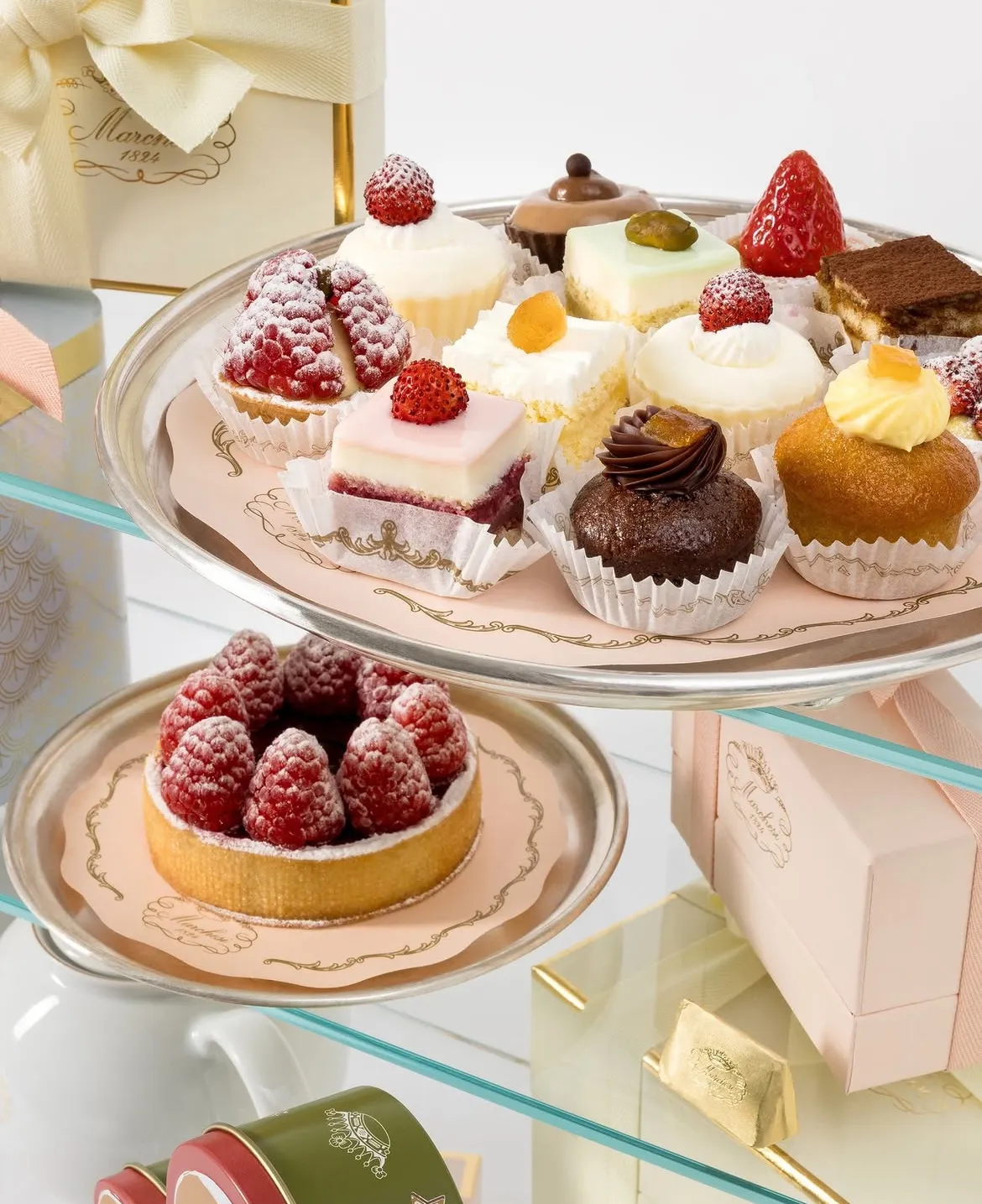
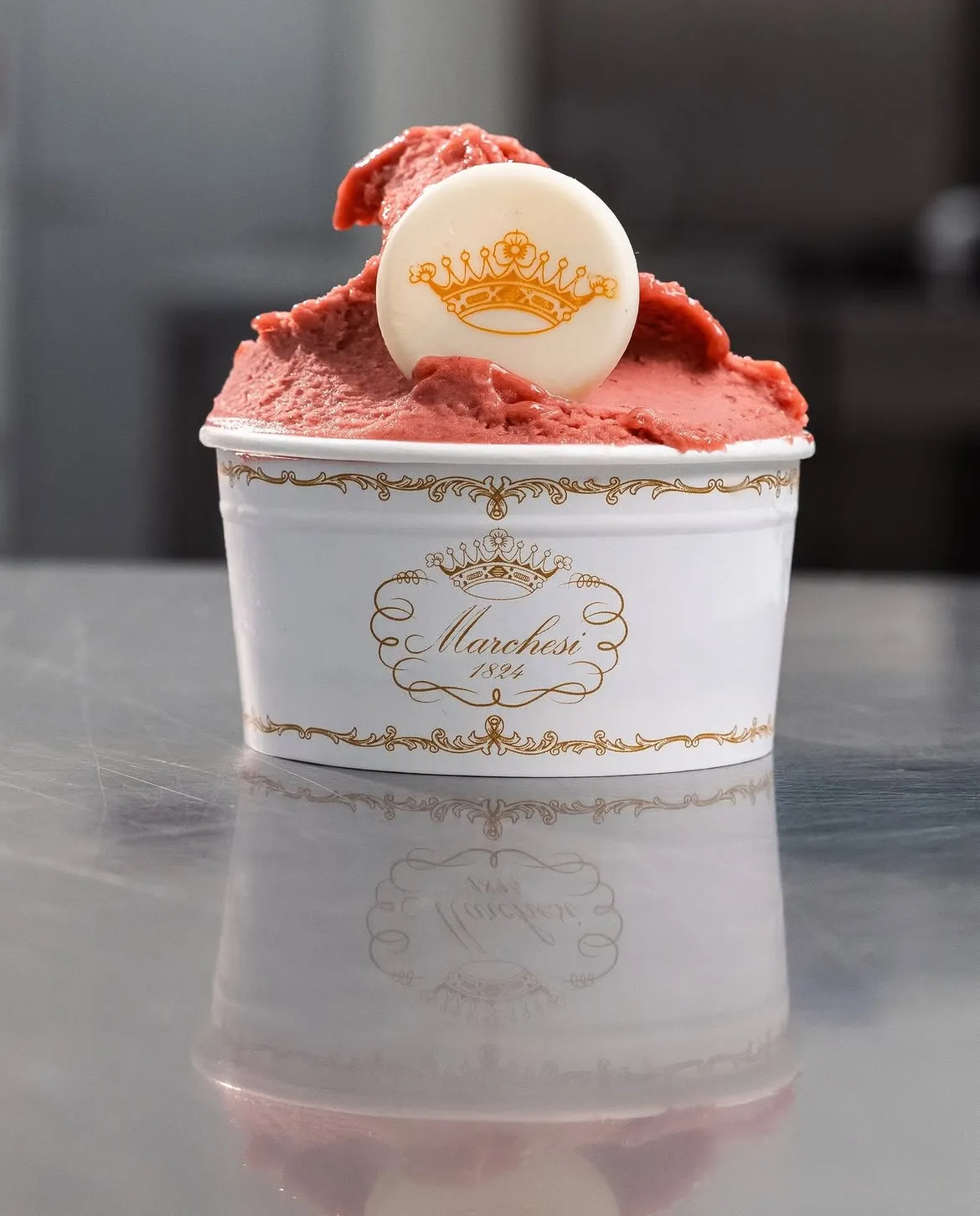
Marchesi’s visual language is unusually consistent. Pastel colours, gold details, precise decoration, polished counters and the famous packaging have become as recognisable as the pastries themselves.
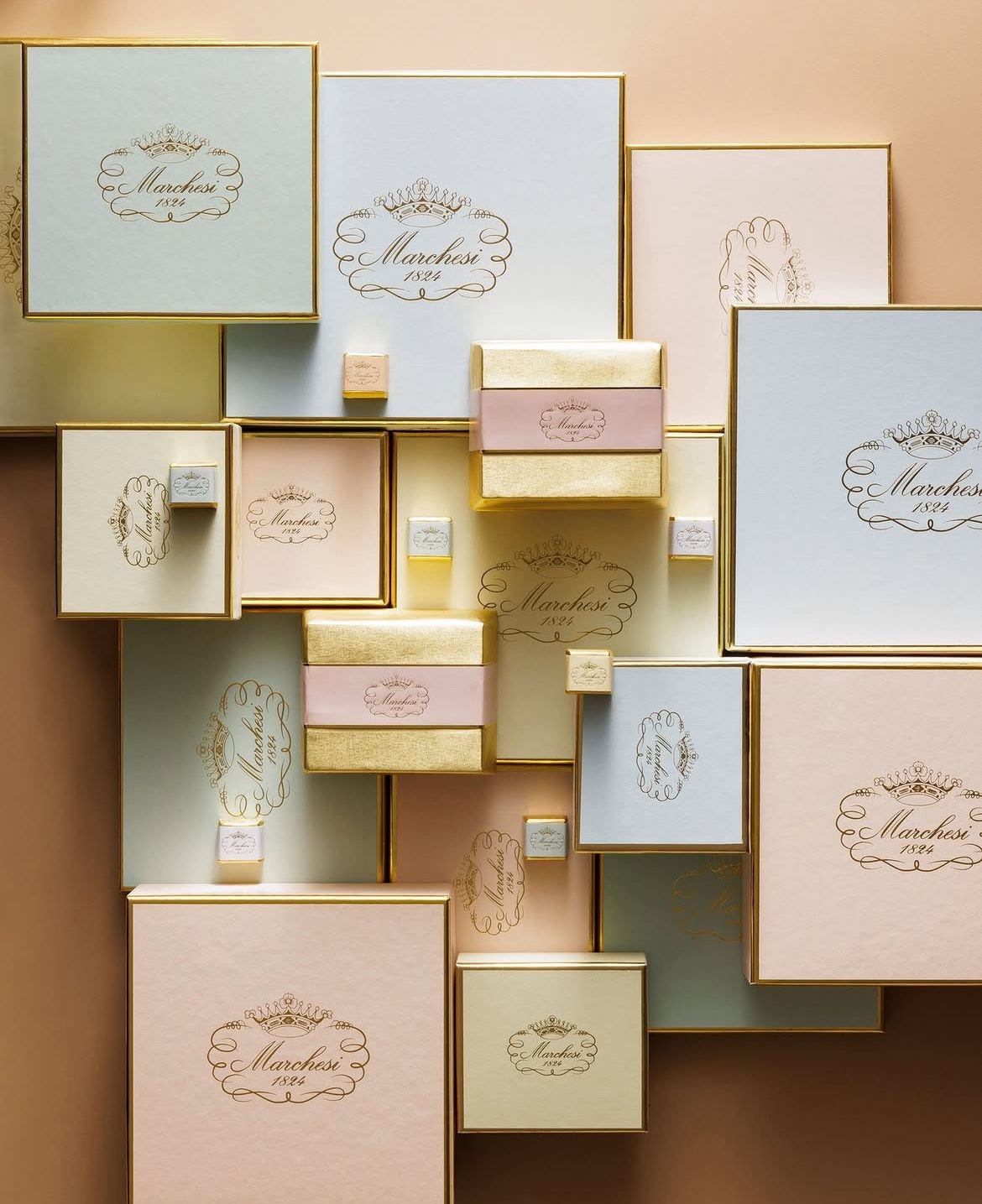
The effect is deliberate. Prada Group describes attention to detail as central to the Marchesi identity, extending from pastry decoration and presentation to window displays and packaging finished with pastel tones and gold leaf.
It is one of the reasons Marchesi feels closer to a fashion house than a conventional pastry shop.
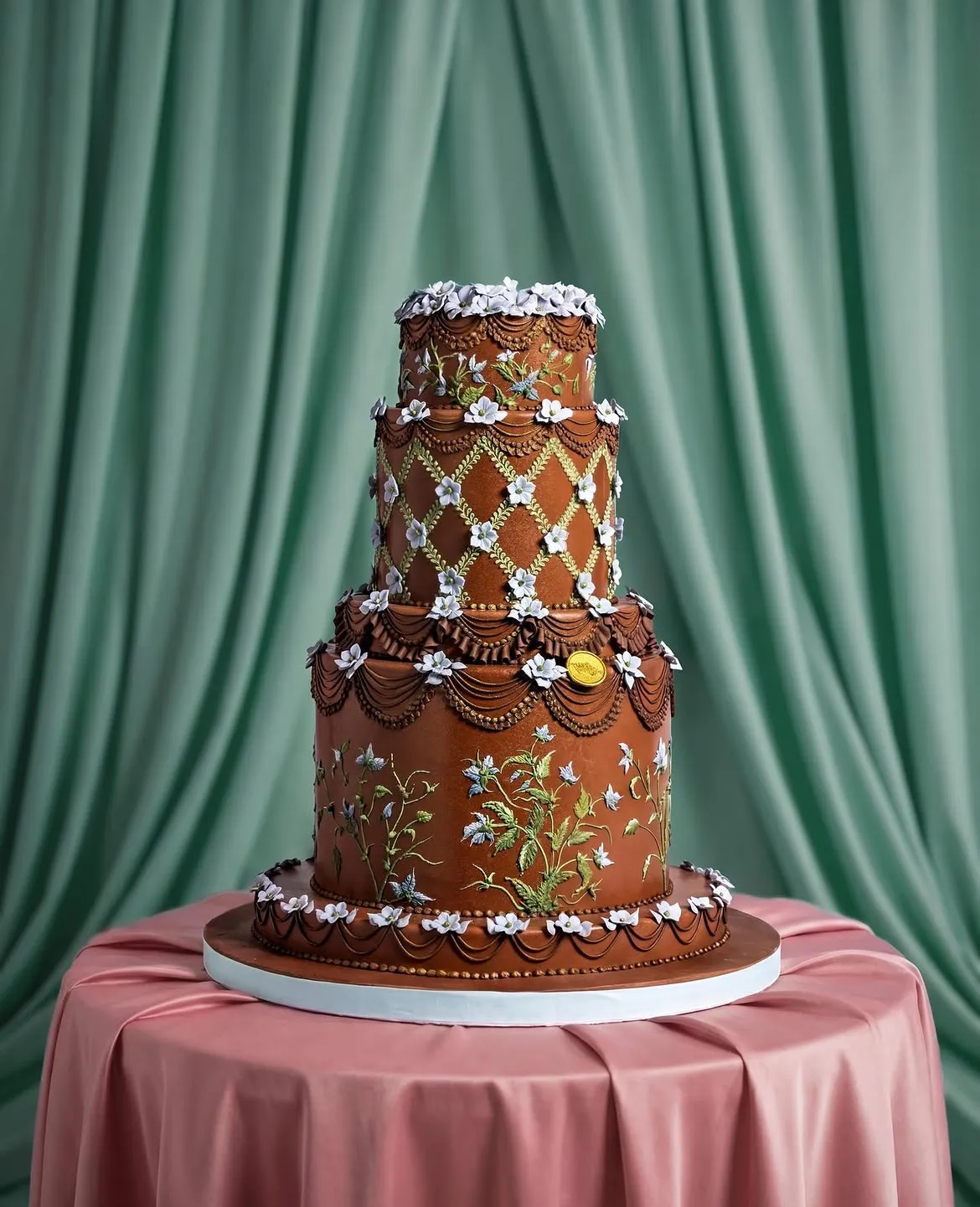
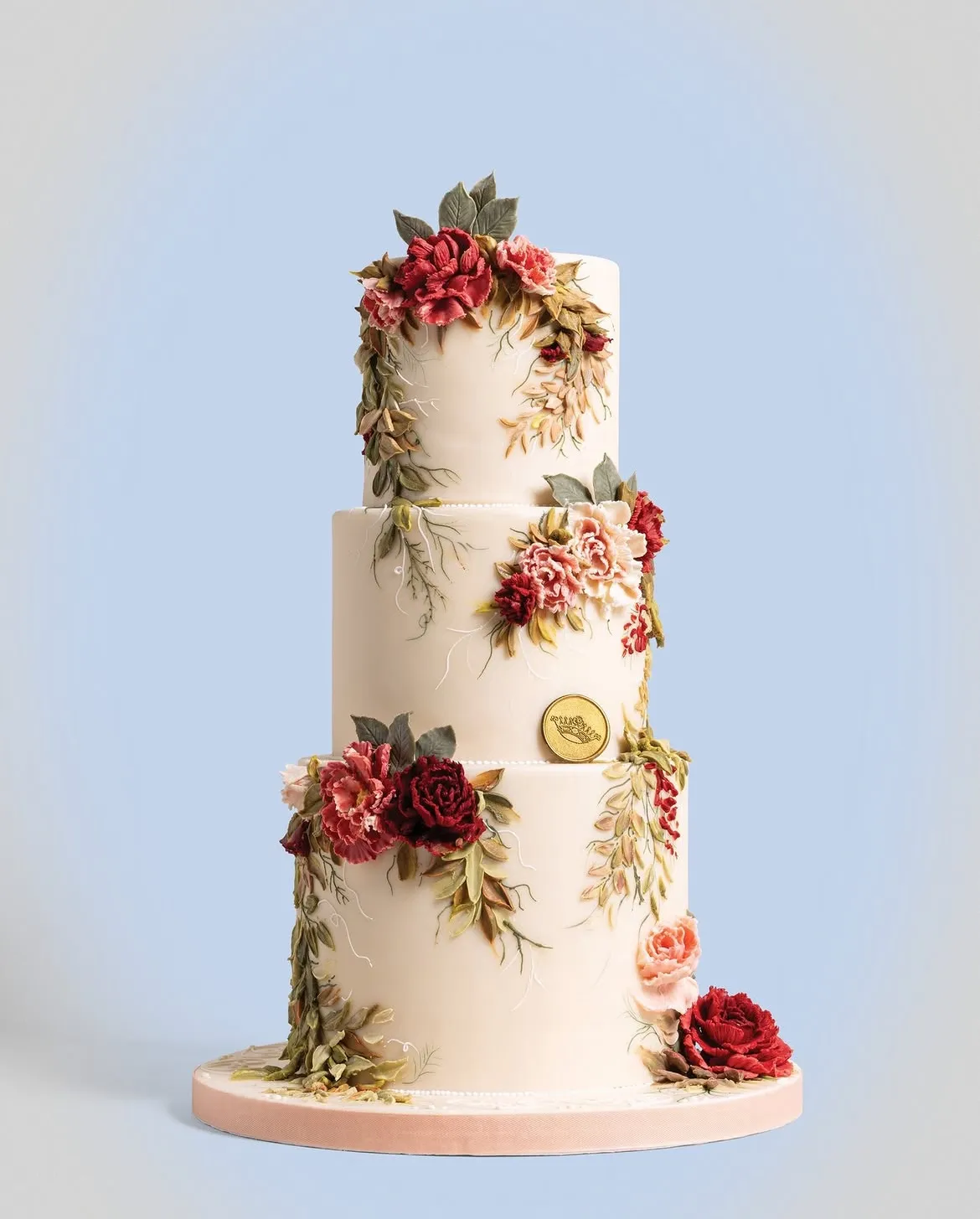
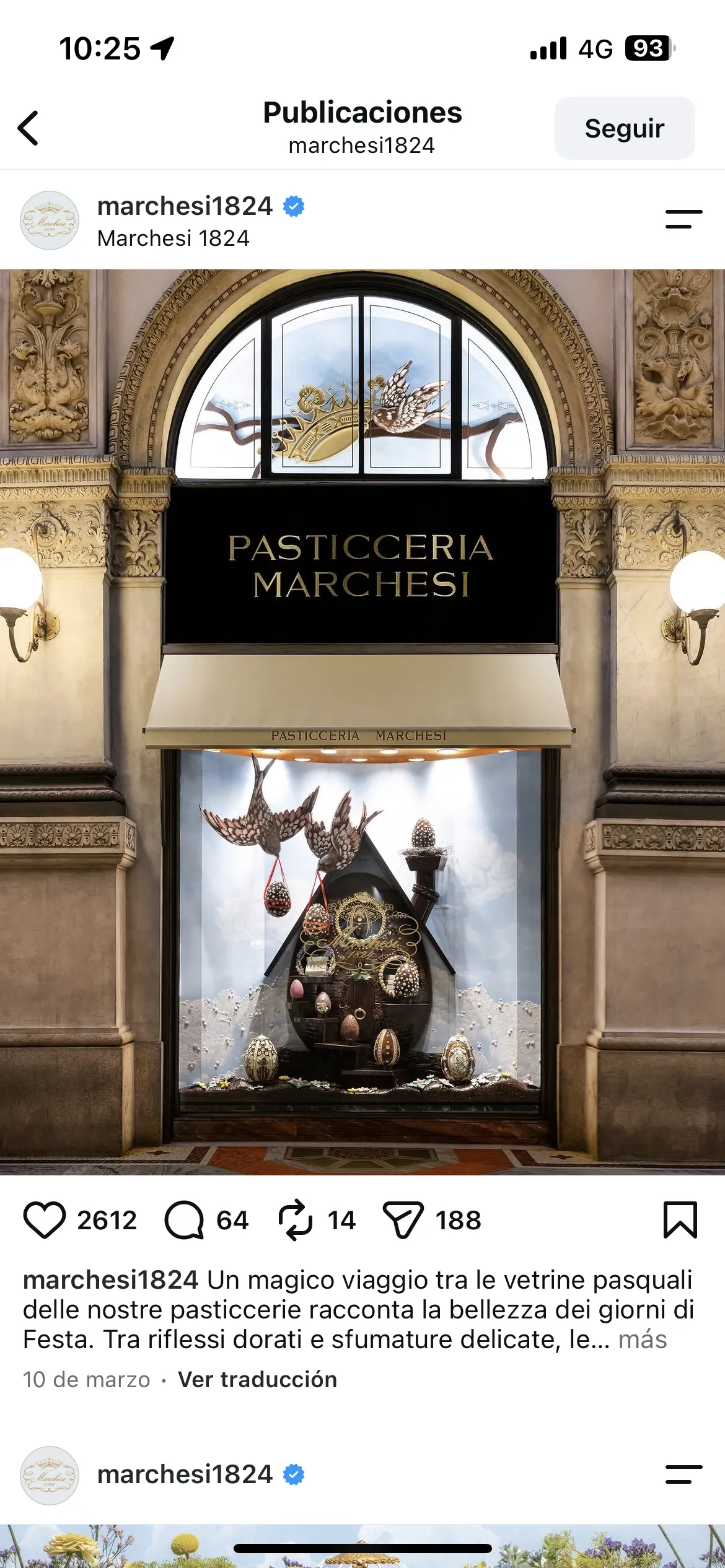
A box of chocolates is packaged with the same care as the object inside it. A cake is decorated with almost architectural precision. Even the display window becomes part of the experience. The whole thing is composed.
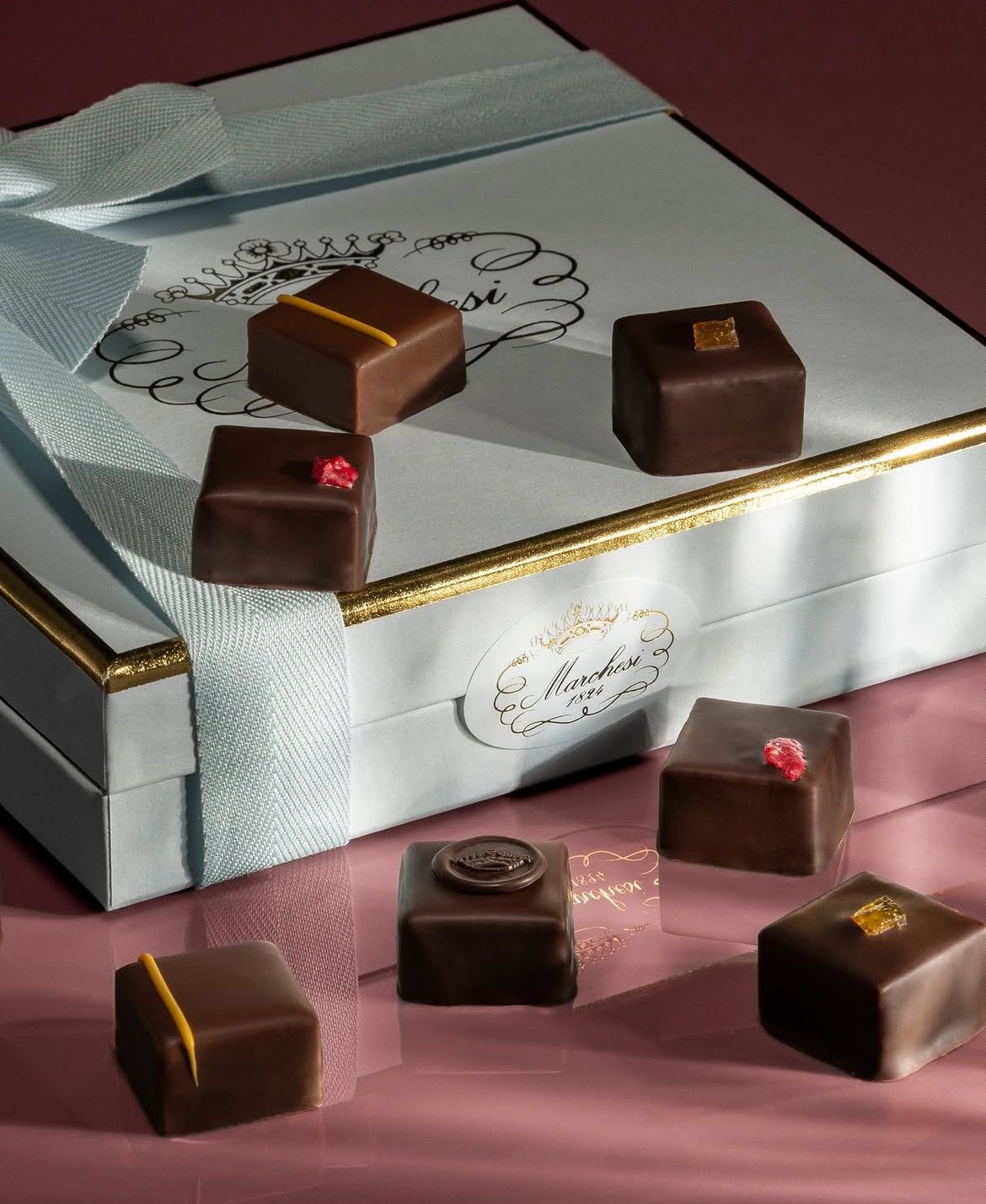
Yet there is nothing particularly new about this obsession with presentation. It is embedded in Marchesi’s history. The pasticceria’s reputation was built not only on recipes but on craftsmanship and the pleasure of seeing things made beautifully.
That helps explain why the brand was such an interesting proposition for Prada.
Then Prada Came Along
In 2014, Prada acquired an 80% stake in Angelo Marchesi Srl, the company behind the historic pasticceria. At first glance, the pairing might seem unexpected. One was a nearly two-century-old pastry shop; the other, one of Milan’s most influential fashion houses.
But culturally, the match made almost suspiciously good sense.
Both businesses were rooted in Milan. Both placed extraordinary importance on materials, craftsmanship and presentation. And both understood that luxury is often communicated through details rather than declarations.
Prada’s plan was not to turn Marchesi into a fashion brand. The acquisition was intended to strengthen the historic name while developing it into new locations in Milan and internationally.
The first new chapters came in the city itself, with locations on Via Monte Napoleone and inside the Galleria Vittorio Emanuele II. The latter was particularly fitting: Marchesi’s café became part of a building at the centre of Milan’s history, and one deeply connected to Prada itself.
Mario Prada founded Fratelli Prada in the Galleria in 1913. More than a century later, Marchesi became part of the same address, creating an unusually neat overlap between two Milanese histories.
A Pasticceria Goes Abroad
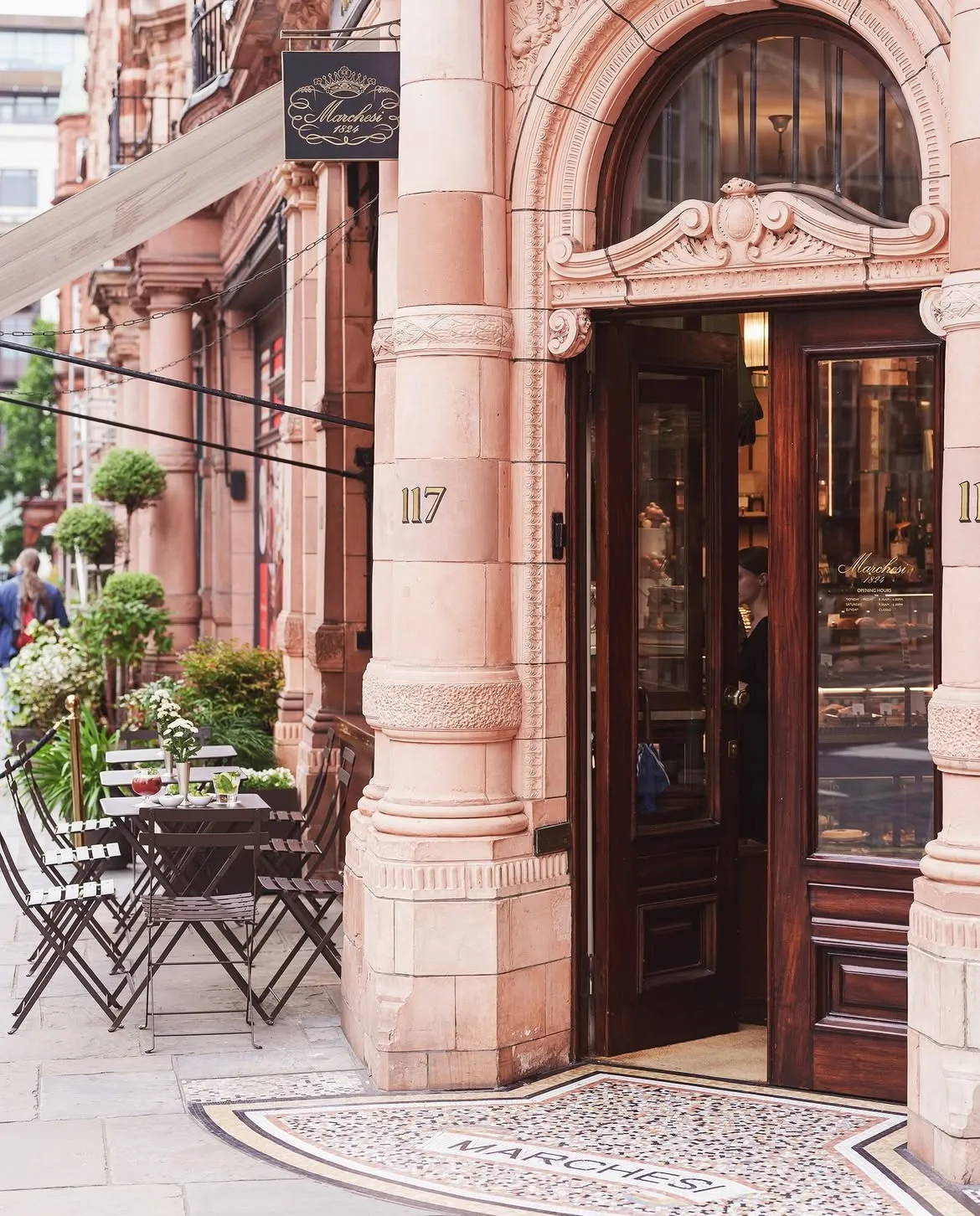
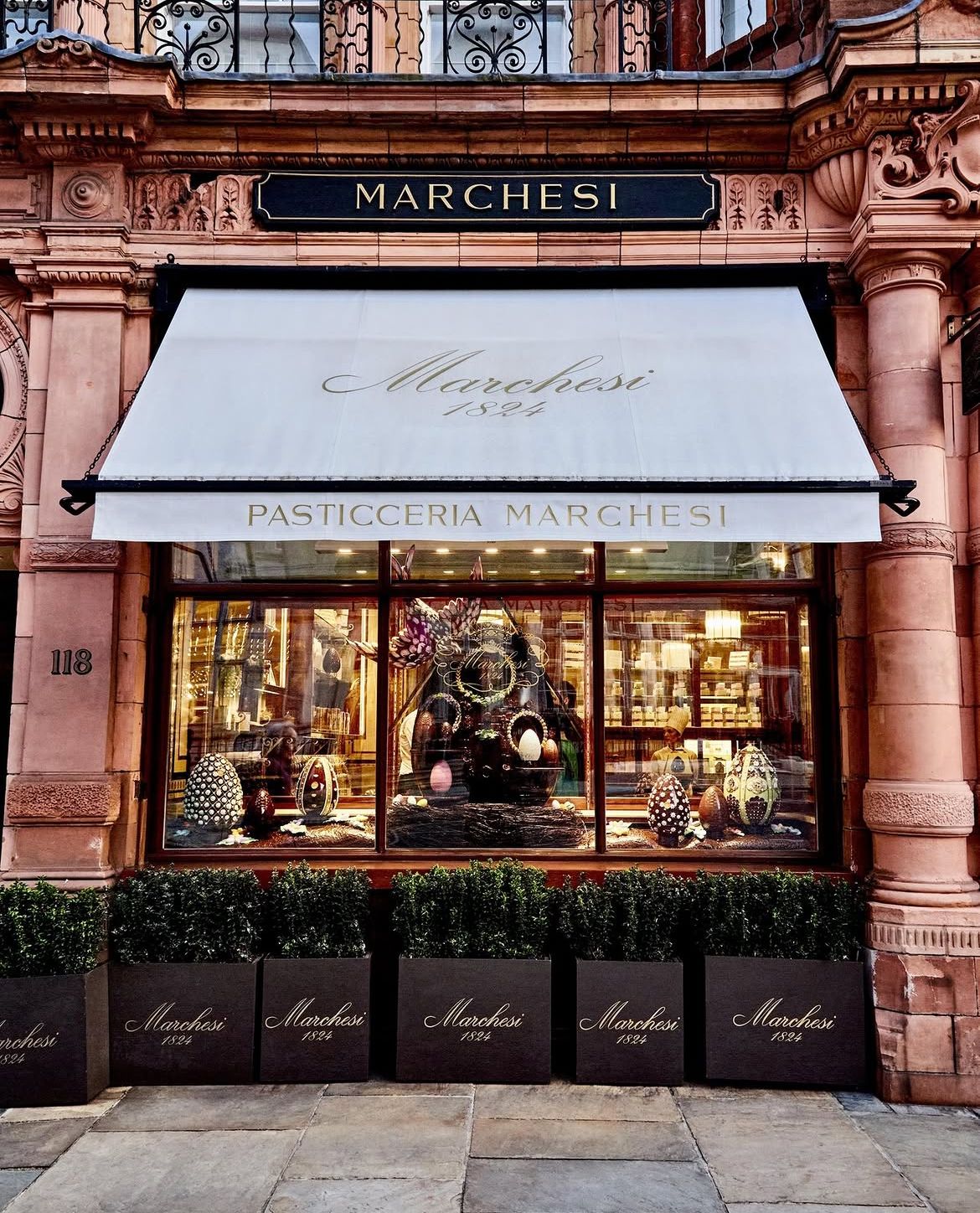
The international expansion arrived in 2019, when Marchesi opened its first location outside Italy at 117 Mount Street in London’s Mayfair.
Even here, the idea was not to create a generic luxury café with an Italian accent. The London space incorporated historic elements of the building, including original wall decorations and wrought-iron hooks, alongside furniture and details inspired by the Milanese locations.
The result was essentially the Marchesi formula transported rather than reinvented.
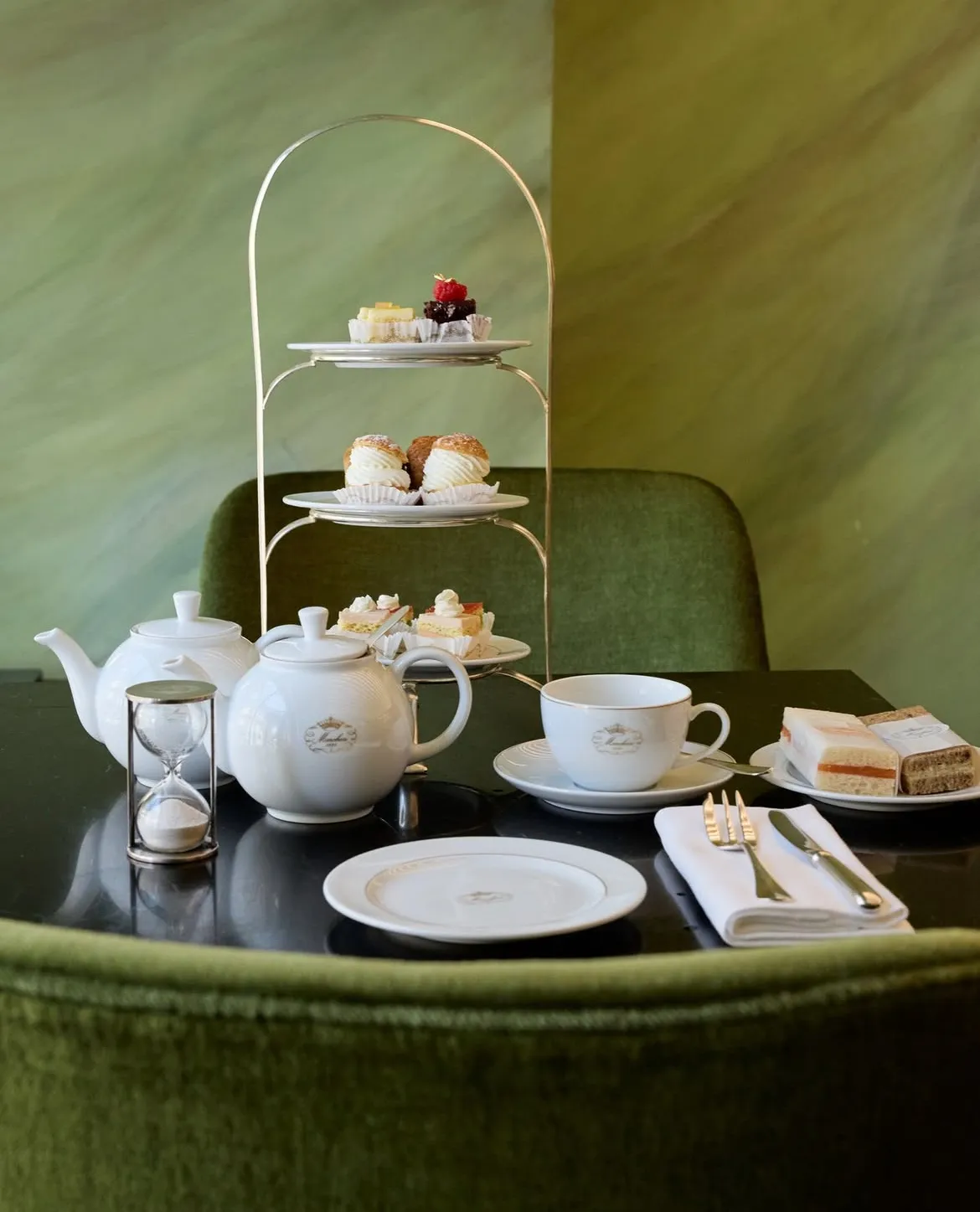
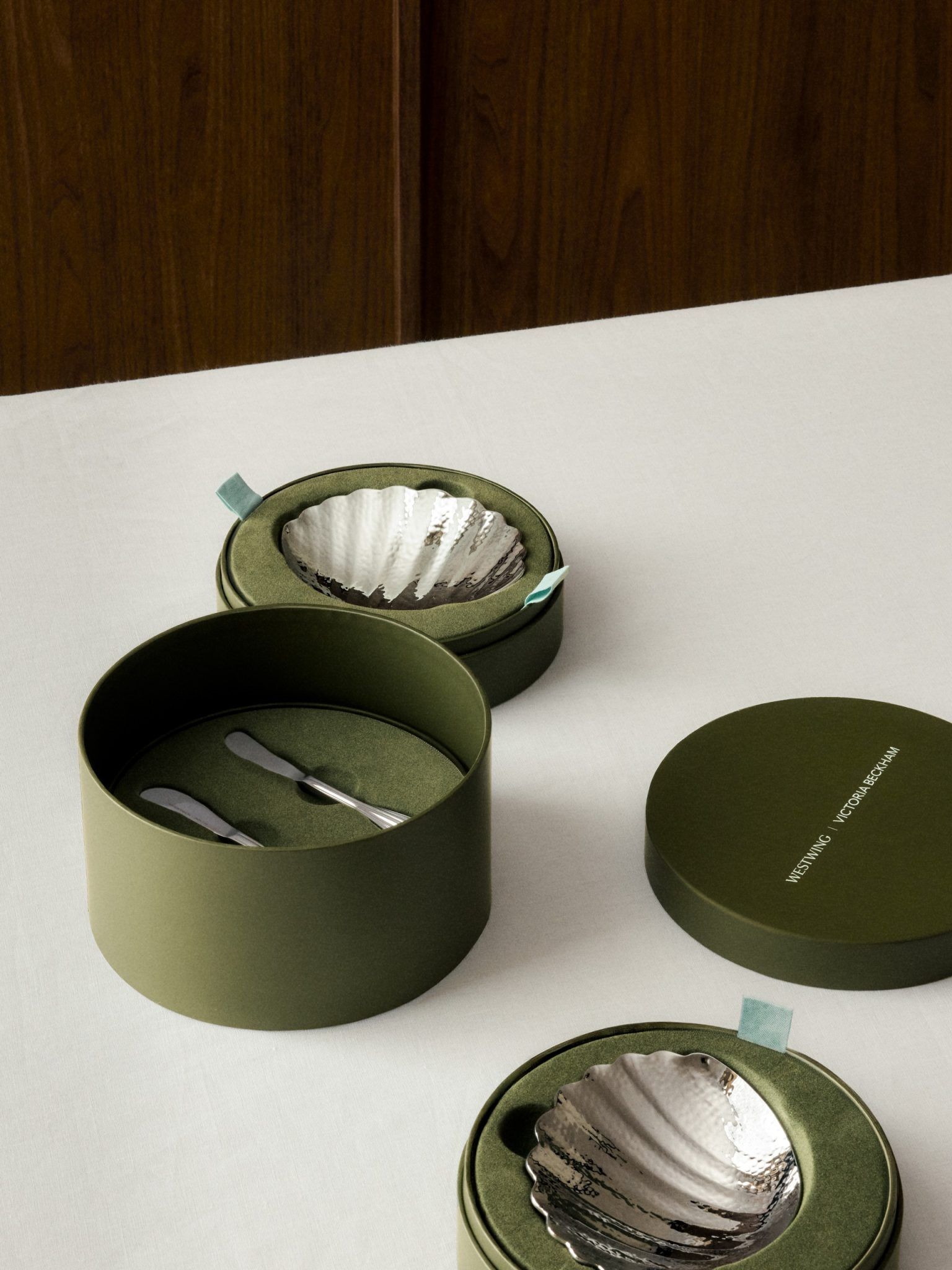
Traditional Italian confectionery, chocolates, pralines and panettone were placed inside an environment designed to feel unmistakably Marchesi. Even the tea room, porcelain and silver cutlery were part of the same carefully controlled world.
The London opening made something clear: Marchesi’s real product was never just pastry. It was an atmosphere.
Two Centuries, Still Looking Forward
In 2024, Marchesi celebrated its bicentenary. Rather than treating 1824 as a historical footnote, the brand used the anniversary to revisit four ingredients that have shaped its story: chocolate, coffee, vanilla and marron glacé.
That balance between preservation and reinvention has become central to Marchesi’s identity.
The recipes remain rooted in Milanese tradition. The panettone is still a defining product. The original pasticceria remains open on Via Santa Maria alla Porta. But the brand now exists within a much larger cultural universe, one that includes fashion, design, hospitality and international luxury.
Its presence inside Prada Galleria makes that relationship particularly explicit. Today, the Marchesi café sits above the Prada men’s boutique, within a project that brings together fashion, art, culture, hospitality and memory.
It is an arrangement that would have been difficult to imagine in 1824, when the Marchesi family opened a small pastry shop in Milan.
And yet, looking at Marchesi today, it feels less like a reinvention than a very long evolution.
Perhaps that is the secret.
Some brands become contemporary by constantly changing. Marchesi has managed something more difficult: becoming contemporary while remaining recognisably itself.
For almost two hundred years, it has understood that a good pastry should taste excellent. Marchesi simply decided that it should look excellent too.
In pictures Image 1 of 13
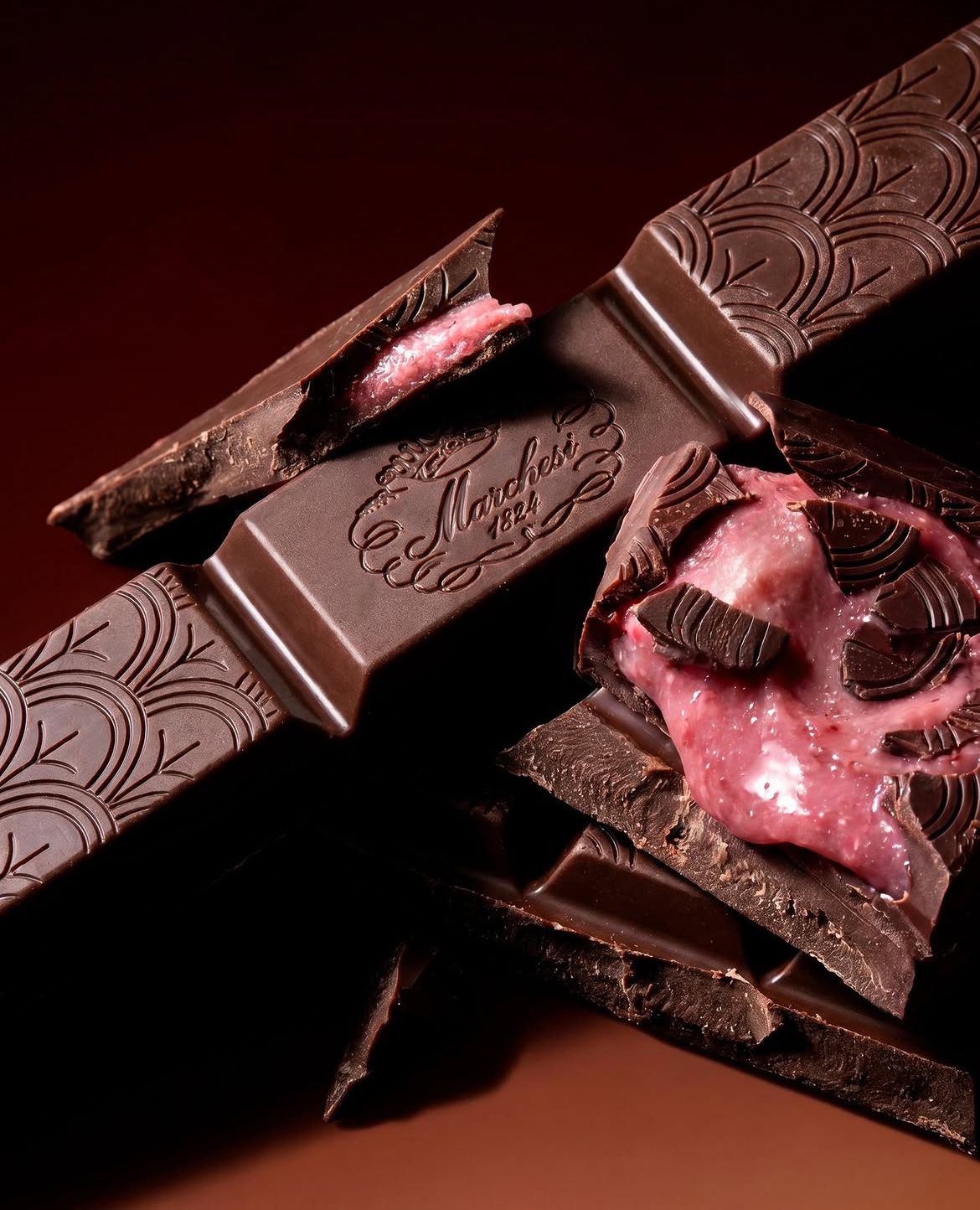
Photo: Marchesi 1824 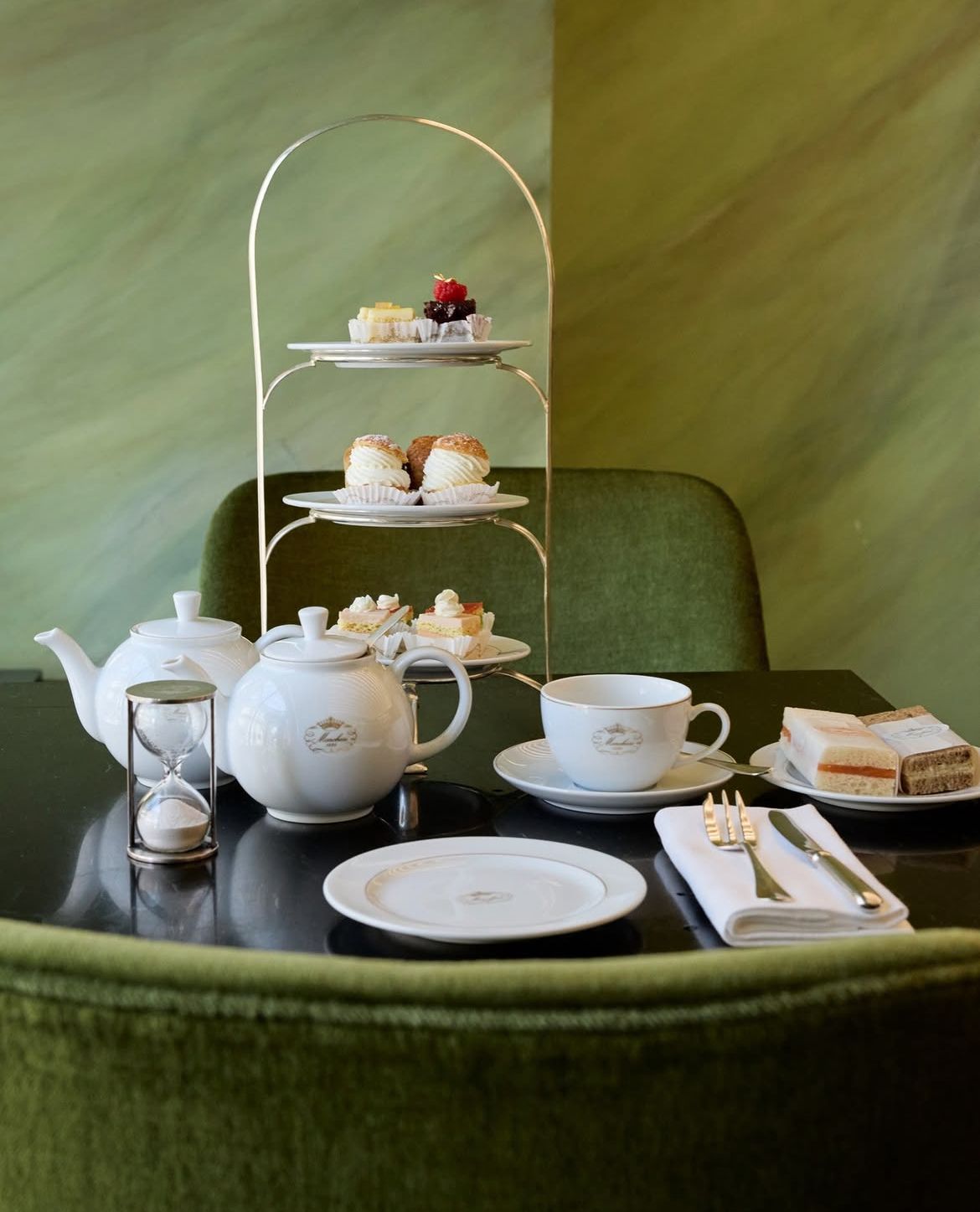
Photo: Marchesi 1824 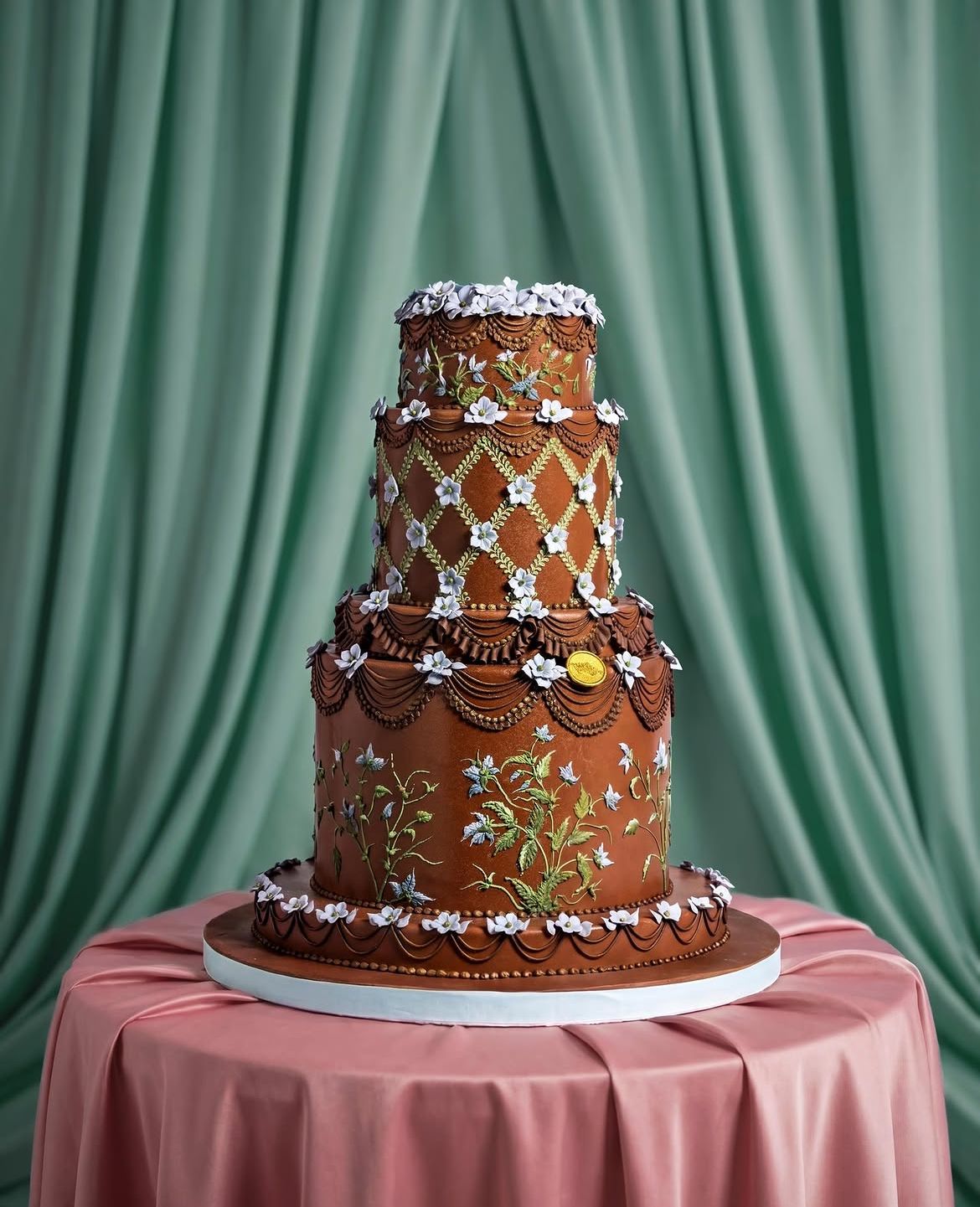
Photo: Marchesi 1824 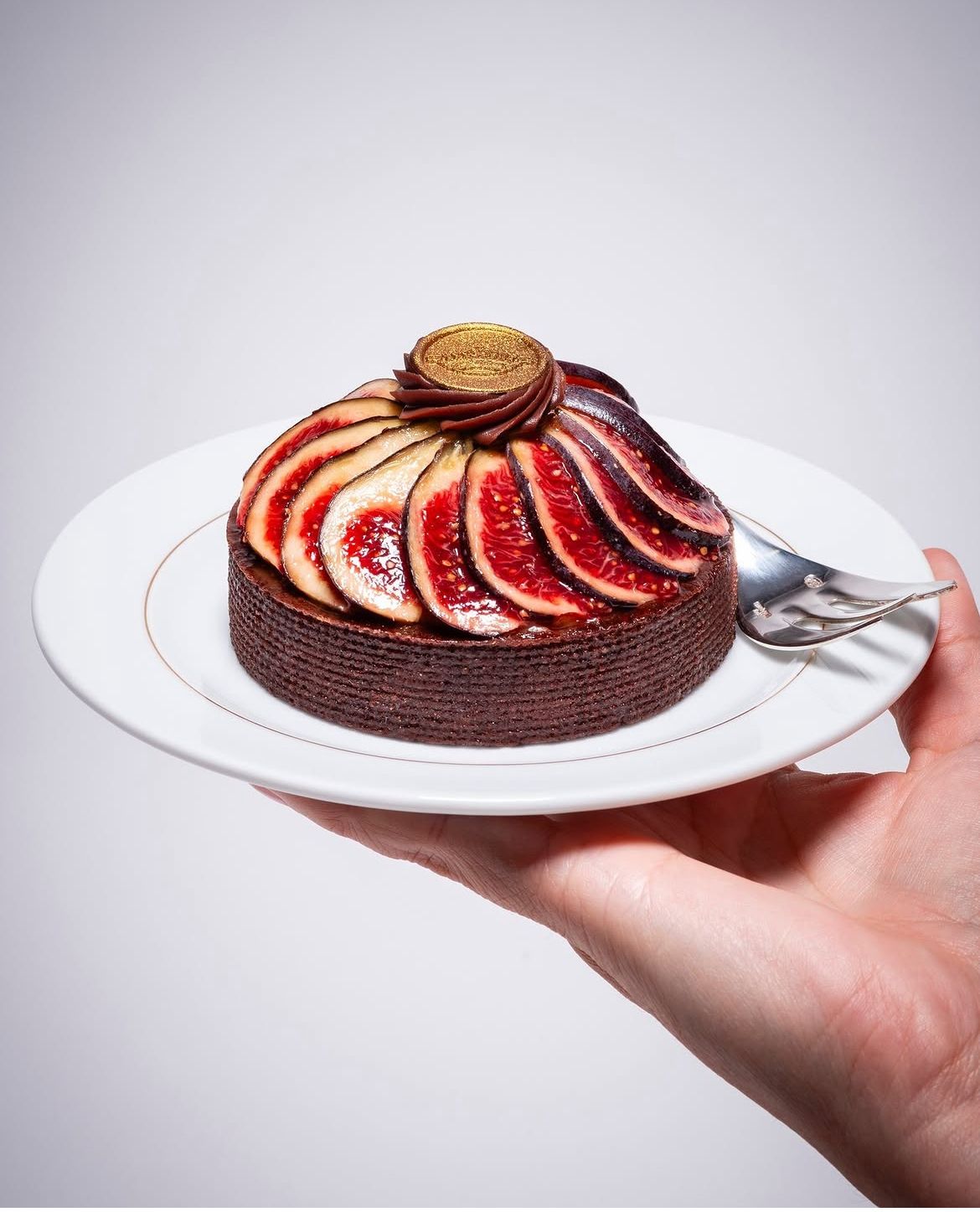
Photo: Marchesi 1824 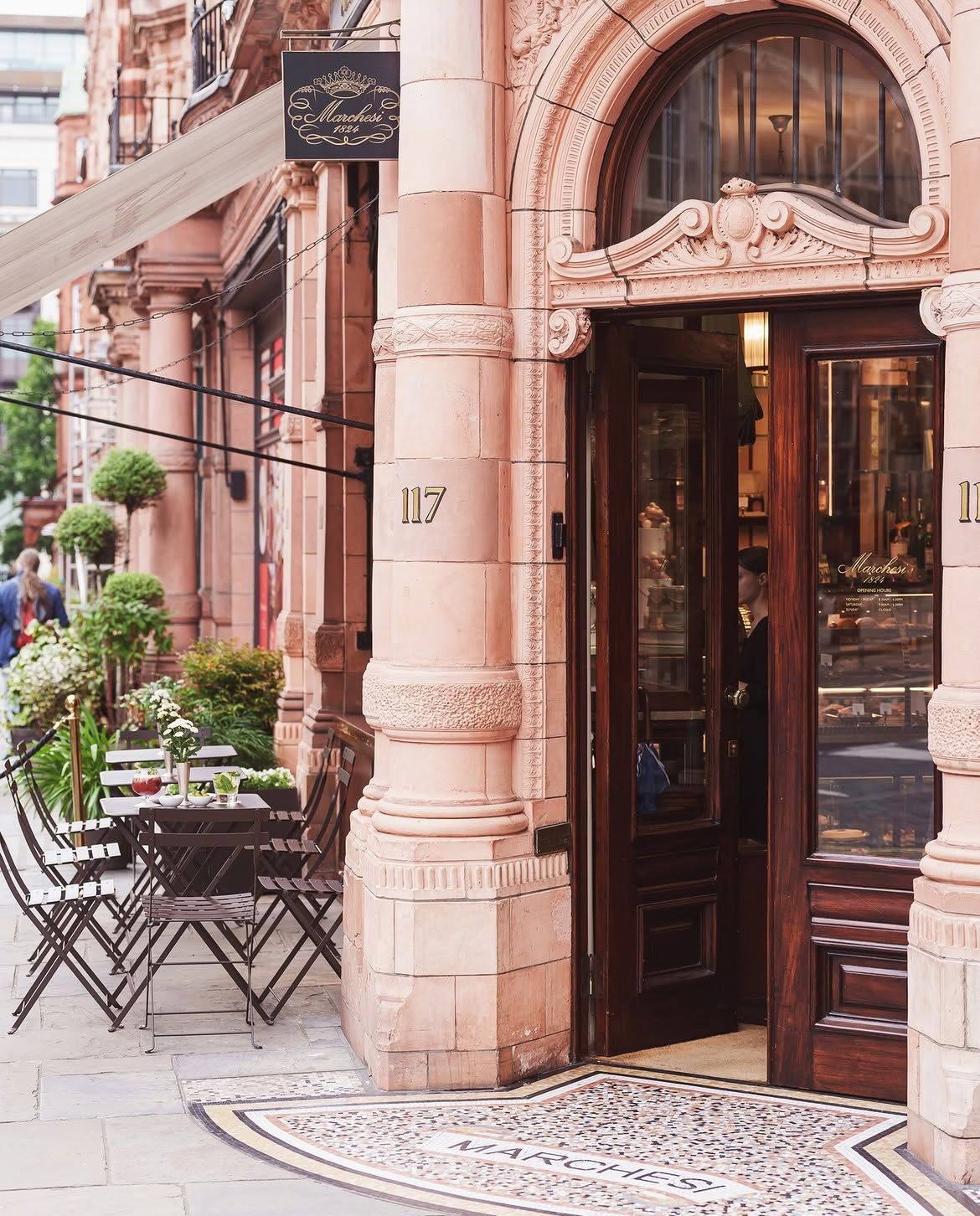
Photo: Marchesi 1824 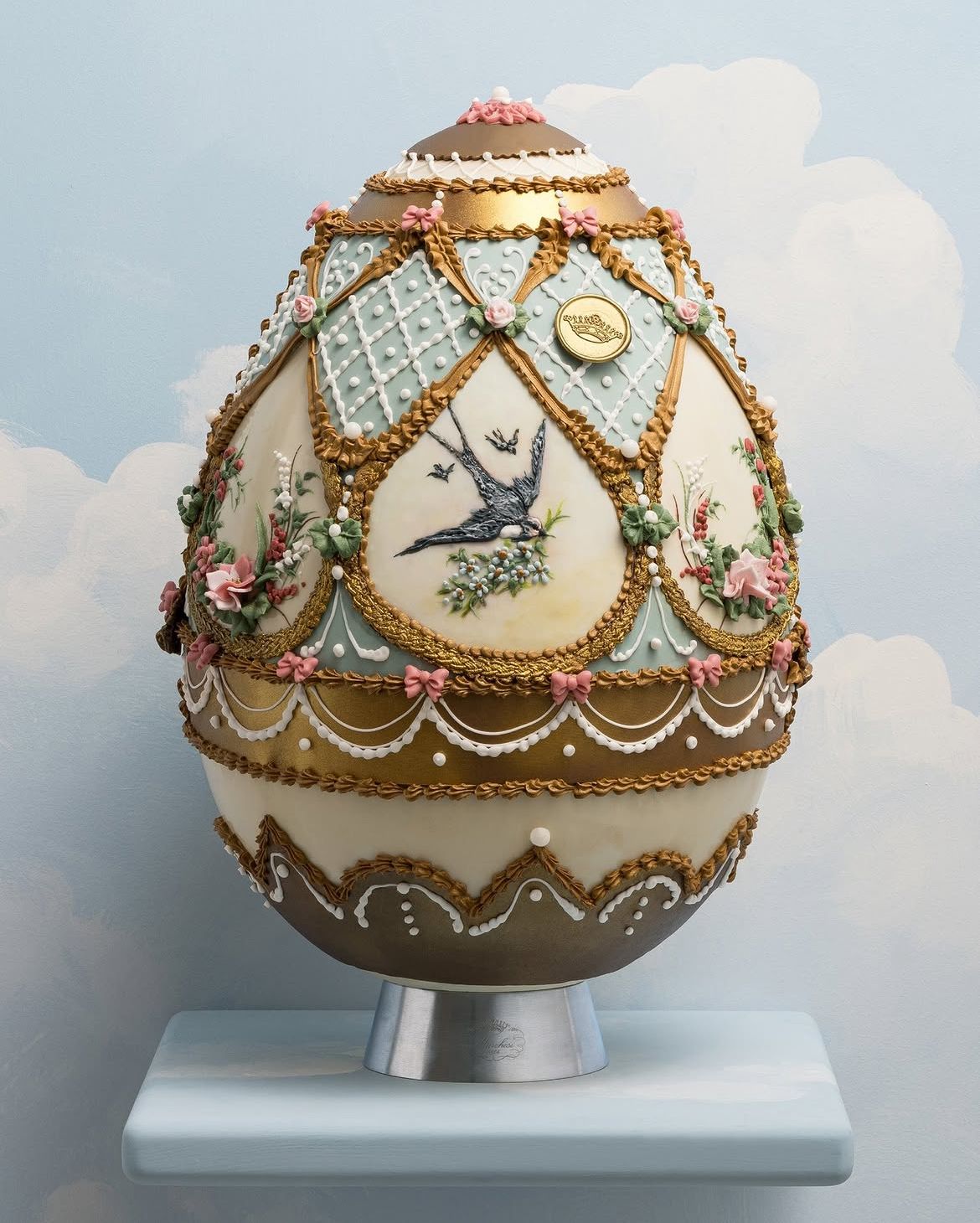
Photo: Marchesi 1824 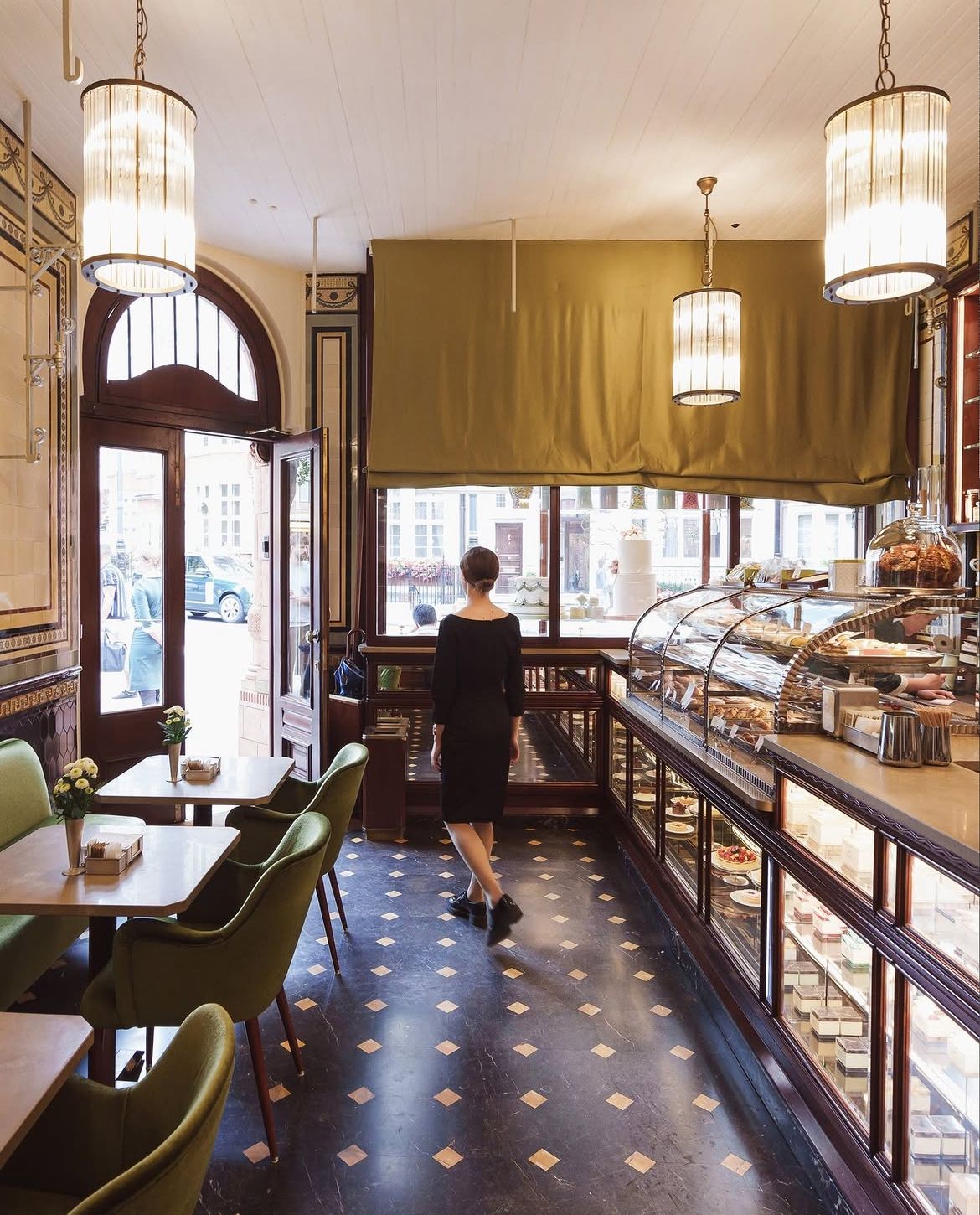
Photo: Marchesi 1824 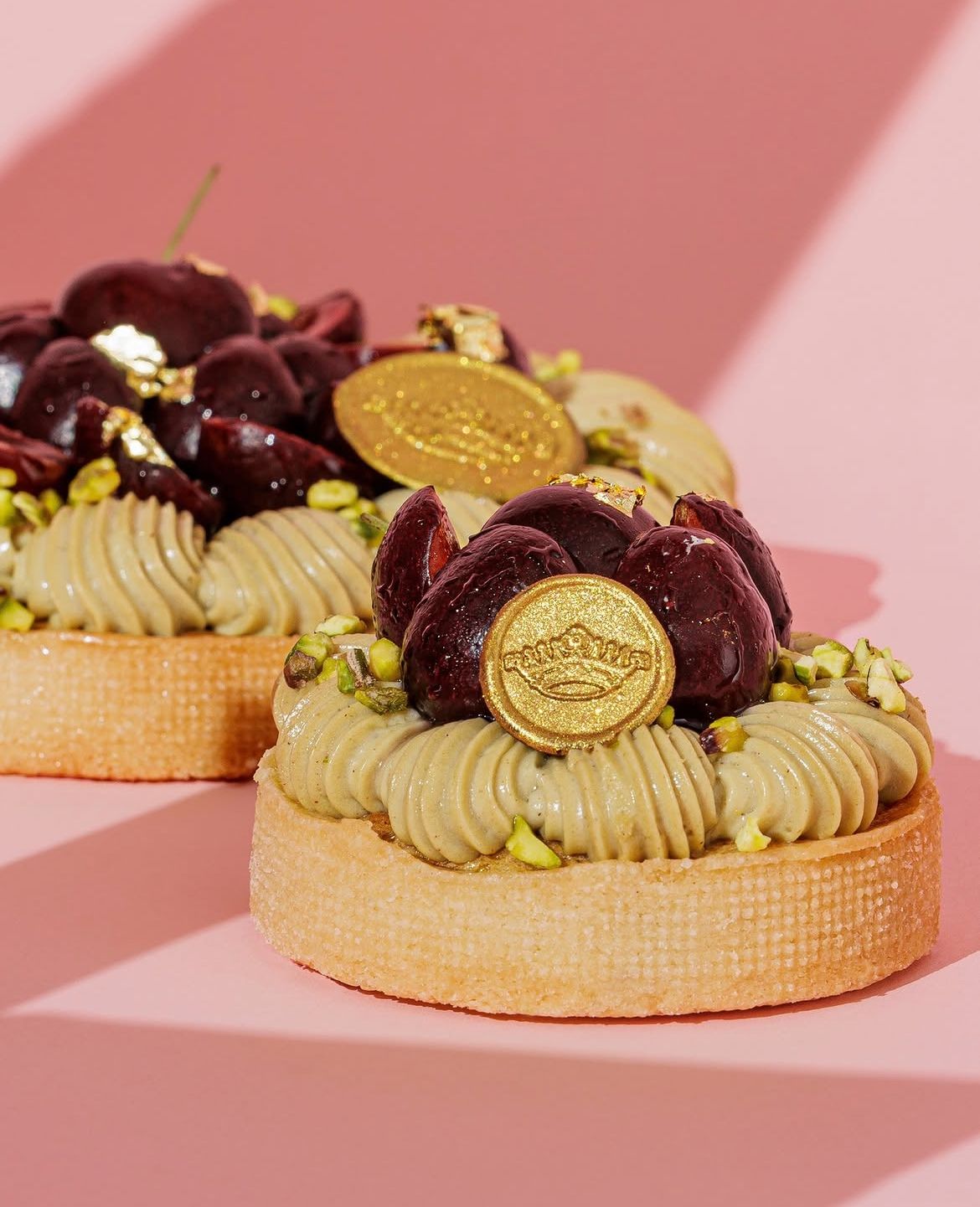
Photo: Marchesi 1824 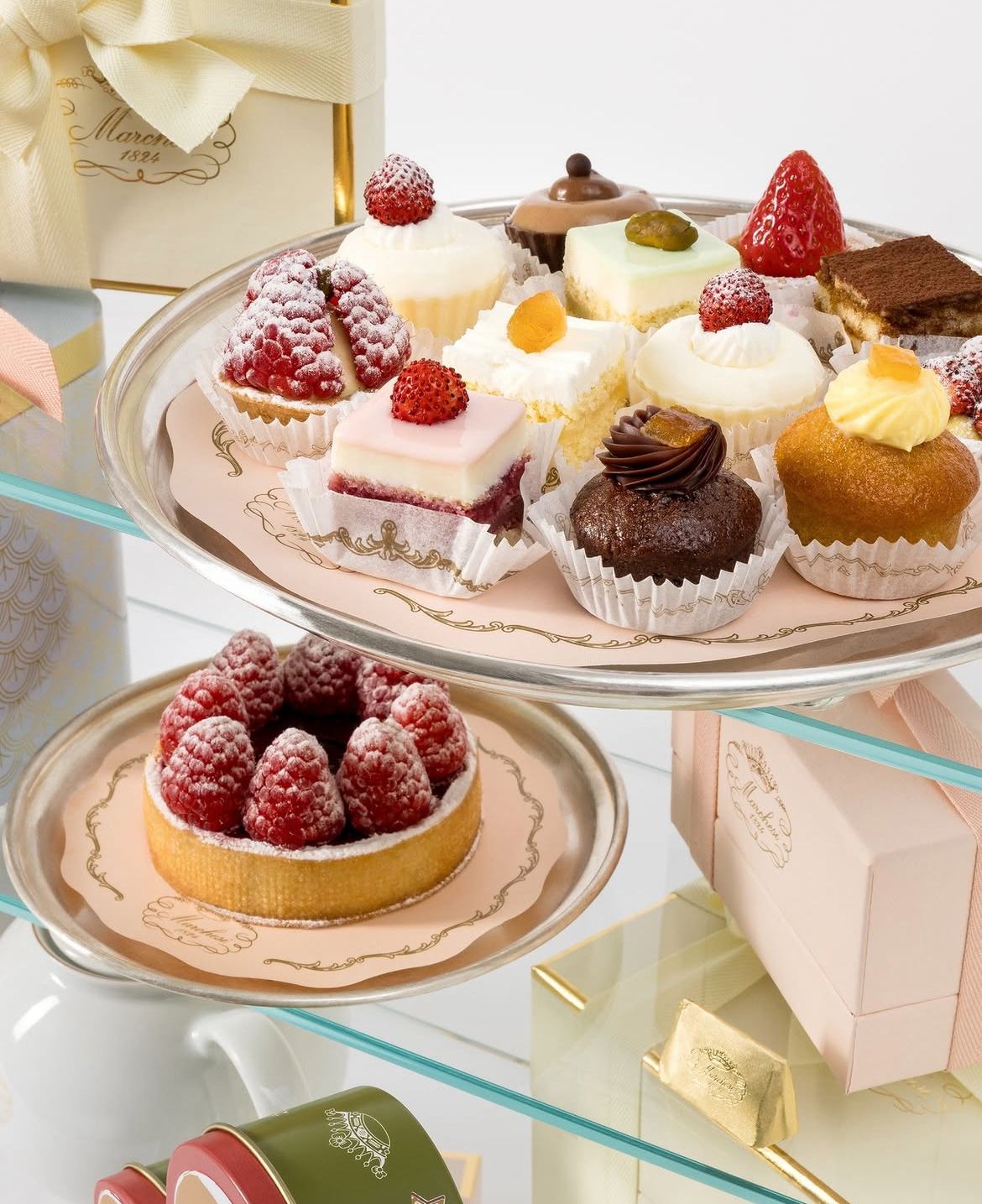
Photo: Marchesi 1824 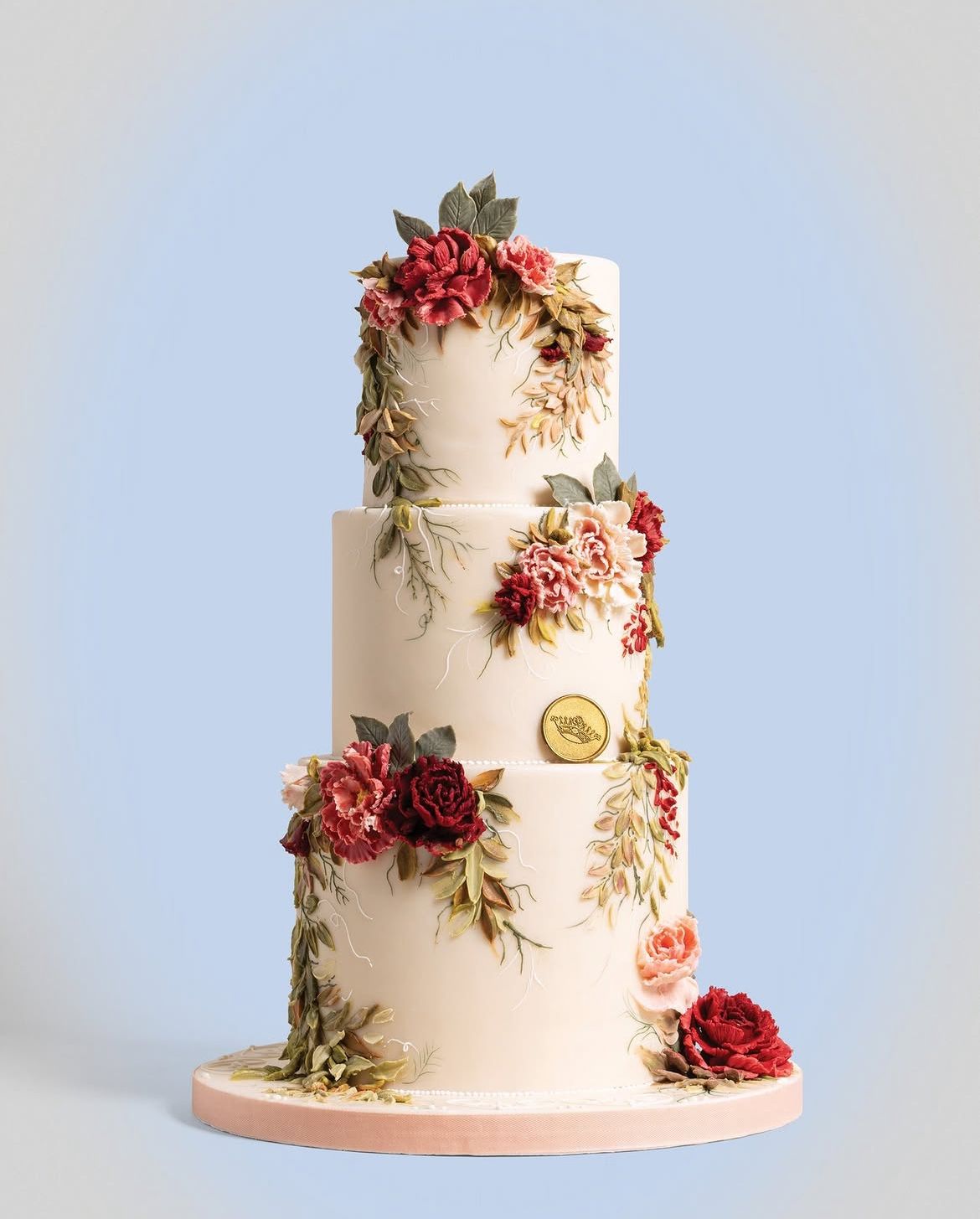
Photo: Marchesi 1824 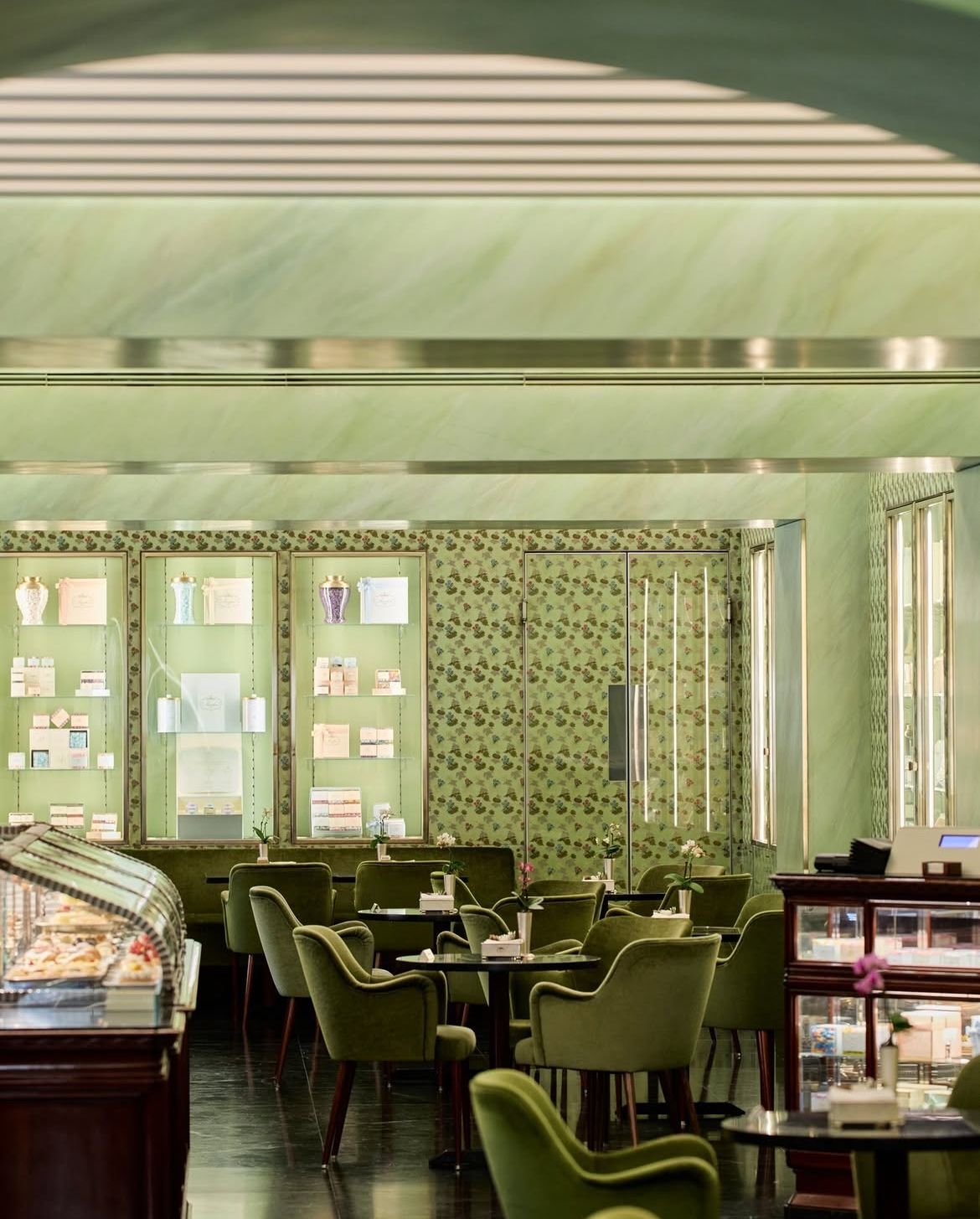
Photo: Marchesi 1824 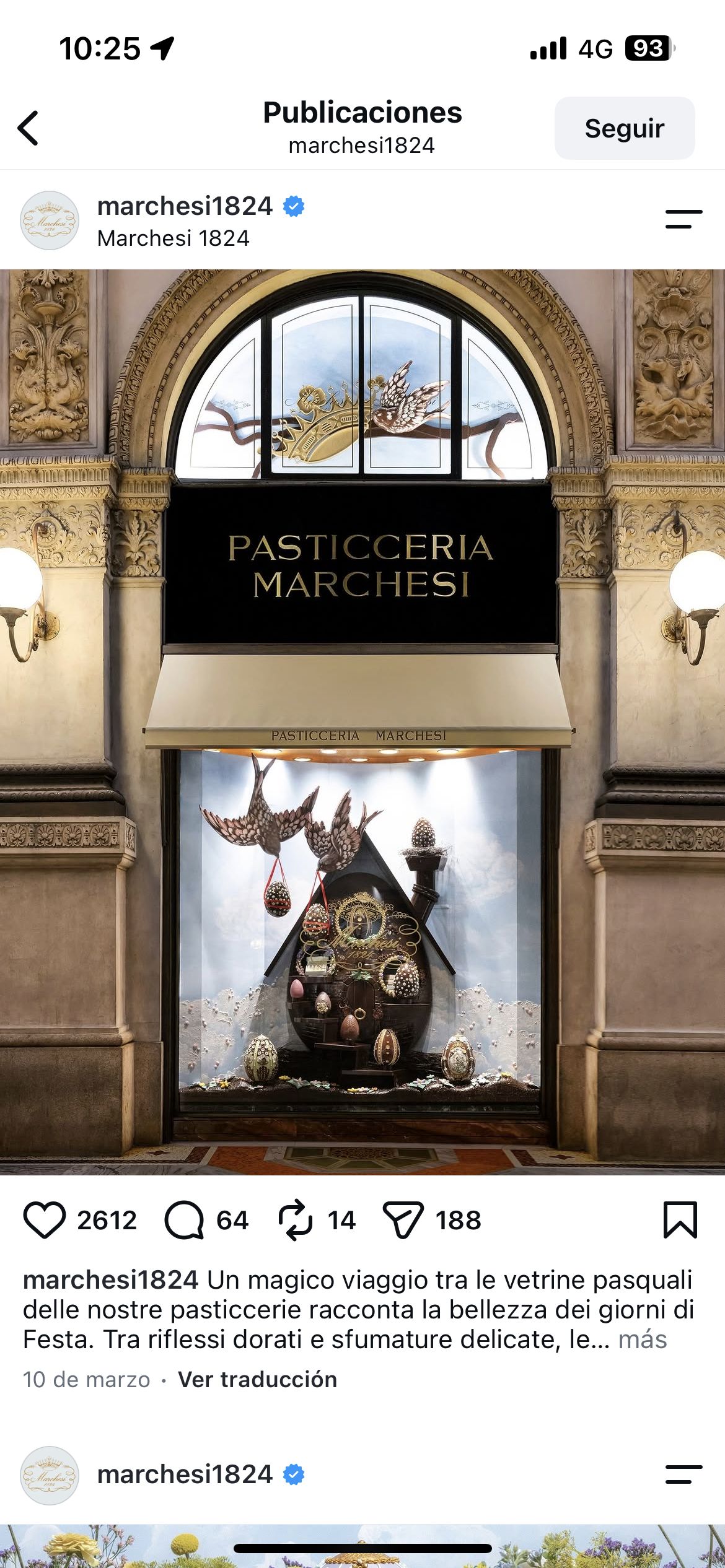
Photo: Marchesi 1824 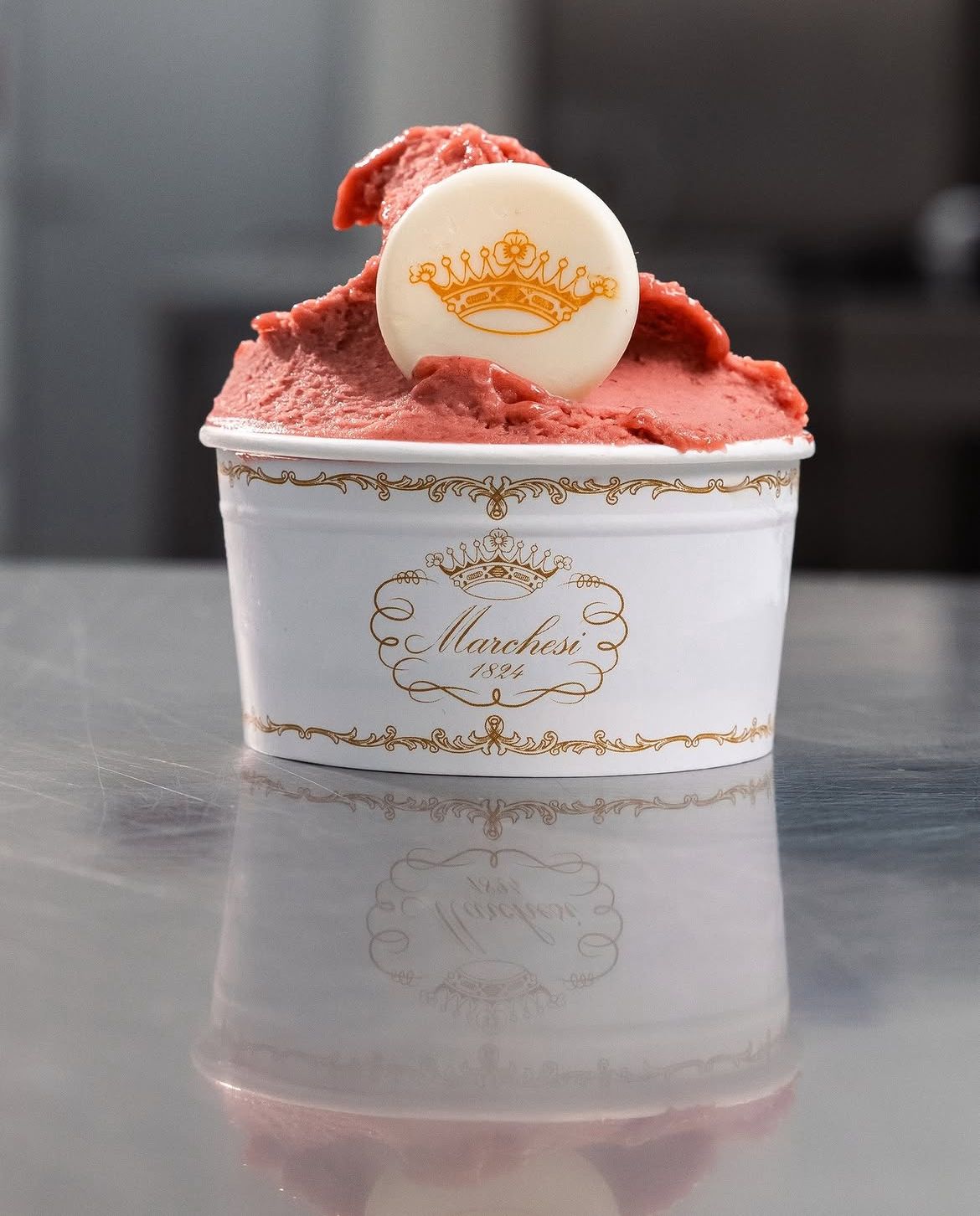
Photo: Marchesi 1824